HOW FDA APPROVES $2.2M CURE FOR SICKLE CELL ANEMIA DISEASE IS BREAKING NEWS! (934 hits)
For Immediate Release!
FDA Approves First CRISPR Gene Editing Treatment for Sickle Cell Disease
Most people with sickle cell disease who received a new gene editing treatment saw their pain resolve for at least one year, but longer follow up is needed.
CRISPR, the gene-editing technology that has revolutionized biological research, is finally available as a medical treatment with regulatory approval. On December 8 the U.S. Food and Drug Administration approved the first CRISPR treatment for sickle cell disease.
The treatment, called exa-cel and made by the companies Vertex and CRISPR Therapeutics, edits a gene involved in red blood cell shape and function. It appears to functionally cure the disease for at least one year. The FDA’s decision makes the U.S. the second country to approve a CRISPR therapy, following exa-cel’s approval for sickle cell disease in the U.K. in November.
Scientifically speaking, exa-cel is “an incredible asset to have,” says Michael DeBaun, a hematologist at Vanderbilt University. But it is still early to say whether the treatment will be permanent and without side effects, he adds.
The FDA also approved another type of gene therapy for sickle cell disease today called lovo-cel, which is made by the company bluebird bio.
WHAT IS SICKLE CELL DISEASE, AND HOW DOES THE NEW CRISPR THERAPY WORK?
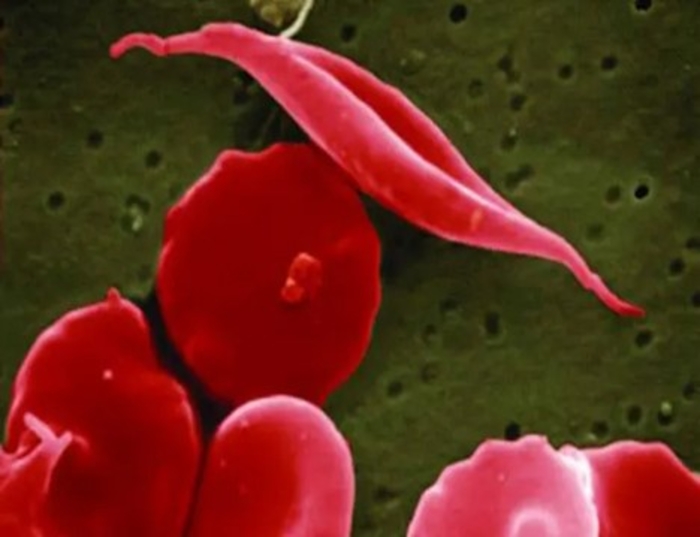
The CRISPR system used in exa-cel targets genes that produce hemoglobin, the protein that carries oxygen in blood cells. In a form of sickle cell disease called sickle cell anemia, mutations in a gene called HBB affect the protein’s structure, causing it to twist normally round red blood cells into a curved sickle shape. These sickled cells clog blood vessels, leading to severe pain and fatigue. In a related condition called beta-thalassemia, which sometimes occurs with sickle cell anemia, the body does not produce enough hemoglobin or red blood cells, resulting in symptoms caused by low blood oxygen levels. These symptoms include fatigue and growth problems in children.
Exa-cel directs an enzyme called Cas9 to a gene, called BCL11A, that typically prevents the body from making a form of hemoglobin found only in fetuses. Cas9 deactivates BCL11A in bone marrow stem cells, where red blood cells are made, by cutting its DNA, and the cells begin producing the fetal hemoglobin and creating red blood cells with a normal round shape. In the new therapy, physicians remove a person’s own bone marrow stem cells, edit them with exa-cel, destroy the rest of the person’s untreated bone marrow and then reinfuse the edited cells.
Because these edited cells eventually repopulate the body, exa-cel is considered a “curative” therapy that will theoretically last the rest of the recipient’s life, although Vertex and CRISPR Therapeutics have followed most of their trial participants for less than two years.
HOW EFFECTIVE IS THE TREATMENT?
So far exa-cel has only been tested in around 100 people with either sickle cell anemia or beta-thalassemia. Nevertheless, in 2019 the FDA gave the companies a “fast-track” approval that allows it to test the therapy in smaller groups of people than would normally be required.
In these trials, which are still ongoing, 29 of the 30 study participants with sickle cell anemia had no pain for one year in the 18 months following their exa-cel transfusions. And 39 out of 42 beta-thalassemia patients no longer needed blood or bone marrow transplants—the standard treatment for this disease—for one year after the exa-cel intervention. Vertex and CRISPR Therapeutics are continuing to track the remaining participants who have not yet reached this time point and will follow all participants for up to 15 years.
WHAT ARE THE RISKS?
The results submitted to the FDA suggest that exa-cel has no major adverse health impacts, although it can cause side effects such as nausea and fever. But DeBaun points out that the participants have only been tracked for a short time and that problems could arise later.
Another concern raised by the FDA is that the Cas9 enzyme could remain active and cut the genome in places other than BCL11A, creating so-called off-target mutations. The companies modeled the most likely places in the genome where the enzyme could cut and found no evidence that this had happened in trial participants. “In light of any new therapy, we remain cautiously optimistic,” DeBaun says.
BESIDES EXA-CEL, WHAT ARE SOME OTHER PROMISING THERAPIES FOR SICKLE CELL DISEASE?
Bluebird bio's lovo-cel, the other gene therapy that was approved today by the FDA, uses a viral vector to deliver a functional version of an adult hemoglobin-producing gene and insert it permanently into a person’s genome. The data bluebird bio submitted to the FDA showed lovo-cel was effective in
US regulators approve two gene therapies for sickle cell disease
Blood disorder that can lead to premature death affects estimated 100,000 people in the United States, most of whom are Black.
The US Food and Drug Administration has approved a pair of gene therapies for sickle cell disease, including the first treatment based on the breakthrough Crispr gene-editing technology, opening up two “transformative therapy” avenues for some patients.
The FDA approved Lyfgenia from Bluebird Bio, and a separate treatment called Casgevy by partners Vertex Pharmaceuticals and Crispr Therapeutics. Both therapies are made from the patients’ own blood stem cells and were approved for people aged 12 and older.
The Vertex/Crispr gene therapy uses the breakthrough gene-editing technology that won its inventors the Nobel prize in 2020. The therapy can be directed to cut DNA in targeted areas, enabling the ability to accurately remove, add or replace DNA where it was cut.
The modified blood stem cells are then transplanted back into the patient, where they attach and multiply within the bone marrow and increase the production of fetal hemoglobin, a type of hemoglobin that facilitates oxygen delivery.
Lyfgenia is a cell-based gene therapy that modifies a patient’s blood stem cells to produce a gene therapy-derived hemoglobin that functions similarly to a type of normal adult hemoglobin not affected by sickle cell disease.
Sickle cell disease is a painful, inherited blood disorder that can be debilitating and lead to premature death. It affects an estimated 100,000 people in the US, is most common in African Americans and, while less prevalent, also affects Hispanic Americans.