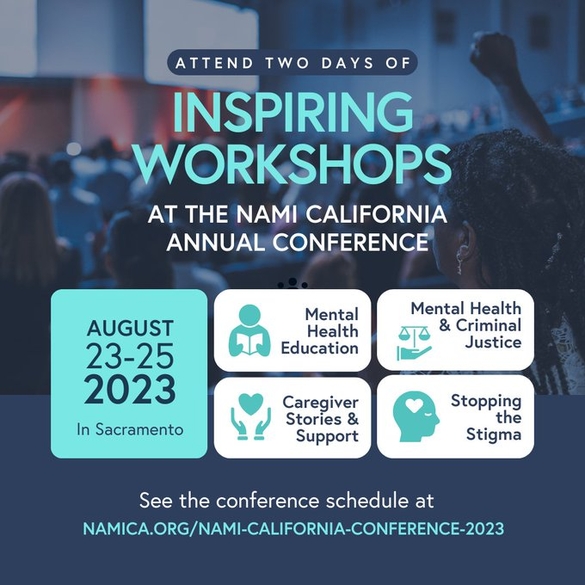
HOW NAMI-CALIFORNIA STATE CONFERENCE TO IMPACT MENTAL HEALTH AUGUST 24 - 25, 2023! (1672 hits)
For Immediate Release From NAMI-California!
YOU ARE INVITED TO PARTICIPATE!
NAMI CA Annual Conference
The NAMI California 2023 Conference is coming to Sacramento! This year we are hosting a rally at the Capitol on August 23 for all conference attendees. Meet us where the change happens and have your voice heard!
Check back soon for exciting speaker announcements.
Thursday & Friday, August 24 & 25, 2023 Grand Sheraton Sacramento Hotel 1230 J Street Sacramento, CA 95814
Super Early Bird Registration Deadline is August 10, 2023, Registrations can be transferred to another person if requested in writing via email to Eugenia Cervantes at eugenia@namica.org by the original registrant at least two weeks before the conference.
No refunds will be given after August 10, 2022-No Exceptions. There is a $35.00 cancellation fee.
If you have any questions, please contact Eugenia Cervantes at Eugenia@namica.org or 916 567-0163
If you are interested in becoming a sponsor, please email Conference@namica.org
About Mental Health Conditions
Mental illnesses are medical conditions that disrupt a person’s thinking, feeling, mood, ability to relate to others, and daily functioning. Just as diabetes is a disorder of the pancreas, mental illnesses are medical conditions that often result in a diminished capacity for coping with the ordinary demands of life.
Serious mental health conditions include major depression, schizophrenia, bipolar disorder, obsessive compulsive disorder (OCD), anxiety disorders, post traumatic stress disorder (PTSD), and borderline personality disorder. The good news about mental health conditions is that recovery is possible. https://namica.org/types-of-illnesses/
Mental illnesses can affect persons of any age, race, religion, or income. Mental illnesses are not the result of personal weakness, lack of character or poor upbringing. Mental health conditions cannot be overcome through will power and are not related to a person’s character or intelligence, but they are treatable. Most people diagnosed with a serious mental illness can experience relief from their symptoms by actively participating in an individual treatment plan.
In addition to medication treatment, psychosocial treatment such as cognitive behavioral therapy, interpersonal therapy, peer support groups and other community services can also be components of a treatment plan and that assist with recovery. The availability of transportation, diet, exercise, sleep, friends and meaningful paid or volunteer activities contribute to overall health and wellness, including mental illness recovery.