Mogadishu, Somalia- “In Somalia, traumatic experiences have happened to people from all walks of life, no matter if you are rich or poor, even parliamentarians themselves have had these experiences and can benefit from the training. It doesn’t only help those in pain, it facilitates social reconciliation, one of the six pillars of the Somali Government,” says Adan.
“I was alone,” remembers 14-year-old Hoda*, recalling that evening in January 2013. “My father is a police officer, and he was working that night.” Hoda was in the bathroom preparing for bed, while two armed men quietly broke into her house. A man of 75 years and his son then hid under her bed. When Hoda returned to her room, the men emerged and began to rape her. Eventually her screams were heard by neighbours, who came to her aid, detaining the men, who are now in prison awaiting trial.
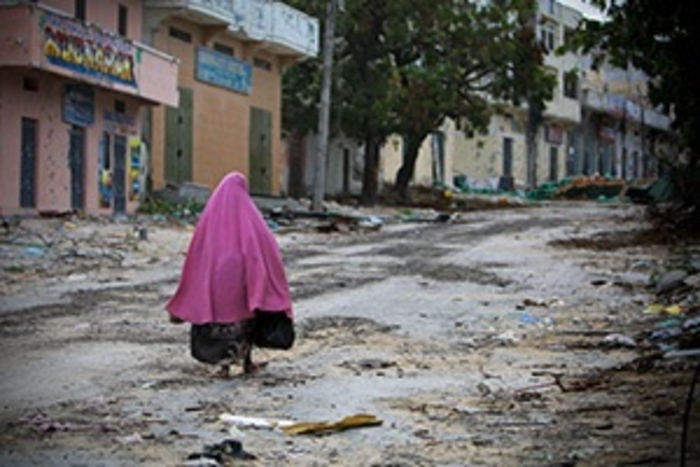
A Somali woman walks through the deserted streets of Bakara Market in central Mogadishu, a city that has endured decades of conflict. Photo: AU-UN IST Photo/Stuart Price Such situations are common in Somalia. Ever since the outbreak of civil war in 1991, the country has been enveloped by sectarian and clan violence and foreign military intervention.
In 2011, African Union forces supported by the United Nations ousted the militant Islamist group Al-Shabaab and have been tasked with maintaining public security and stability for the democratically elected government. While open fighting is no longer the norm, for the people who live here, daily life is still dangerous. For women and girls, who often bear the brunt in post-conflict situations, violence remains an ever-present threat.
To help survivors overcome their trauma, UN Women is supporting a community healing project being run by the Somalia Youth Development Network (SOYDEN). The director of the project, Adan Bare, recalls seeing Hoda sitting at the back of a trauma healing session, ashamed to tell her story. He spotted her and asked a female staff member to speak to her privately.