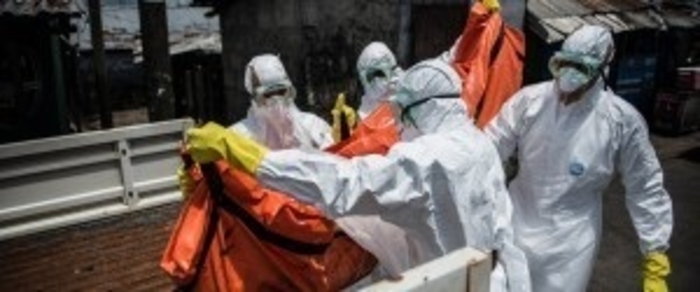
Ebola virus disease Information for Healthcare Workers (952 hits)
October 14, 2014 -Yesterday, the Centers for Disease Control and Prevention (CDC) called for every hospital to think about Ebola preparedness. As a nurse working in acute and critical care, you have no doubt been affected by reports of Ebola Virus Disease (EVD) cases in the U.S., and may be thinking of possible implications for you and your practice.
As you know, a nurse at Texas Health Presbyterian Hospital in Dallas who tested positive for EVD (despite wearing full protective gear while caring for the patient) is part of our community. Our prayers are with her for a full recovery. We are also sending supportive thoughts to her colleagues, as the CDC works with healthcare providers to understand any further precautions that may be needed to prevent transmission of Ebola.
AACN stands ready to support you by offering several resources we think you will find useful. You play a vital role in:
Being preparedStaying informed with accurate informationEducating others Protecting the safety of your patients, their families, your co-workers and yourself It is possible that future patients with EVD will require care in acute and critical care units, and this prediction warrants an urgent reminder of well-established protocols for infectious disease control. The authority for these protocols is the CDC, and we strongly encourage you to review the important information and resources available through the following links:
Clinician Information for Ebola in U.S. Health Care Settings Sequence for Putting On and Removing PPETools for Protecting Health Care PersonnelChecklist for Patients Being Evaluated for EbolaInfection Prevention and Control RecommendationsAssociation for Professionals in Infection Control and Epidemiology (APIC) Today, the CDC will host a teleconference on Preparing for Ebola: What U.S. Hospitals Can Learn from Emory Healthcare and Nebraska Medical Center. We encourage you to partner with leaders at your hospital to ensure you are prepared with protocols and the necessary personal protective and other equipment for the safe care of patients.
CDC Call Information ******* TODAY ******* Time: 2:00 - 3:00 p.m. (Eastern Time)Audio Dial In: Registration is not required888-603-9630 (U.S. Callers)630-395-0291 (International Callers)Passcode: 9976995 Please check the CDC site regularly for continual updates, and follow us on Facebook and Twitter, where we will keep you updated as more information becomes available. We are grateful for your knowledge, expertise and commitment to providing excellent care to acutely and critically ill patients. We know our community will show its strength once again in the care of the most vulnerable patients and their families.
This is a time for us, as members of the AACN community, to be leaders and the rudder as we navigate this storm. With deep appreciation,
Teri Lynn Kiss Connie Barden Dana Woods RN, MS, MSSW,CNML, CMSRN RN, MSN, CCRN-E, CCNS CEOBoard President Chief Clinical Officer
American Association of Critical-Care Nurses 101 Columbia Aliso Viejo, CA 92656-4109 800-899-2226 (AACN) 949-362-2020 (Fax)