6 Ways to Help Kids to do Their Homework – Tips by Smart Playrooms (2022 hits)
For many parents it’s a struggle to get their children to do homework each day. The kids come home from a long day of school and all they want to do is play video games or watch television. What can a parent do? Creating a space just for learning will help your child do better in school while maintaining more harmony in your home. Smart Playrooms is a duo of teachers (both moms!) who design smart and fun playrooms for kids as well as homework stations. Here are six ways parents can create a super homework station, shared by the Smart Playrooms team Chris Simpson and Karri Bowen-Poole.
1. Designate a homework space
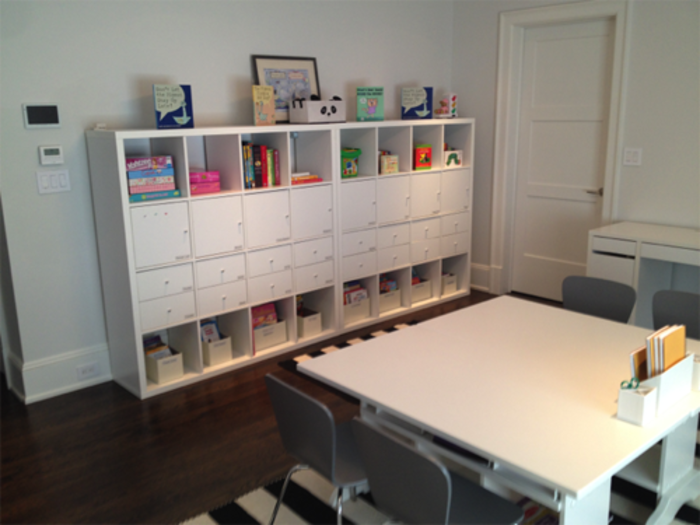
Kids often need structured environments to be able to concentrate on their work. By designating a homework space, your child will know that’s where they need to spend an hour each day doing their homework after school. The homework space should be away from the television, and kept uncluttered and free of distractions. For younger children, placing a child-size table in the kitchen or dining room allows parents to provide the level of supervision they need. For older children, a desk in an office or bedroom helps eliminate distractions.
2. Stock up on homework supplies
Make sure the homework space also has all of the necessary supplies needed like paper, pencils, rulers, erasers, etc. Smart Playrooms designs custom playrooms and homework centers for kids and they help parents organize all of their children’s toys and school supplies. The more organized a space is, the more your child will be able to focus on his or her work. (Plus, it’s like your child has their own office area, which they tend to love!)
3. Establish a routine
Some children need a break when they come home from school and others do best when they start homework immediately. You and your child can decide what works best and create a routine. If they need a break, let them play outside in the backyard, go for a walk, or even play a board game to give their minds a rest for a bit.
4. Recognize a job well done
When your child sits down and does his homework on his own without being told to, he deserves some recognition. Be verbal about how you appreciate his good behavior and are so happy that he has tried his best. Rewards don’t have to be a physical prize; your child will respond to positive reinforcement like words of encouragement.
5. Read once a day
Some kids struggle with homework because they do not have strong reading skills. By reading to your child at least once a day you are encouraging a good habit, opening your child’s mind to imaginative stories, and overall contributing to him becoming a good reader. Instead of thinking of reading a chapter from a history book as a chore, your child will then be excited to learn.
6. Incorporate music and play
Whenever possible, try to incorporate some kind of music or games into their homework and study time. Kids will more easily be able to memorize information when it’s set to a rhythm. Help them come up with a song and dance when they have to remember important dates, the names of Presidents, capitals, etc. It also helps to come up with educational games to aid your child in subjects like math and English.
The design, layout and organization of a play area greatly affect the behavior, independence and creativity of children. We incorporate the most effective educational and organizational strategies into a child’s play area to meet the needs of children. Open-ended play materials foster educational and creative play in kids.
Smart Playrooms encourages kids to get their creative and imaginary sparks flying during playtime. Owned by teachers and moms, the Smart Playrooms team knows how important it is to inspire children to learn and create in their own, imaginative way. Their unique teaching and classroom experience is used to design smart play spaces that will benefit children of all ages because they can find, play, and put away the toys and materials with ease.