People need to learn the truth about Africa (1437 hits)
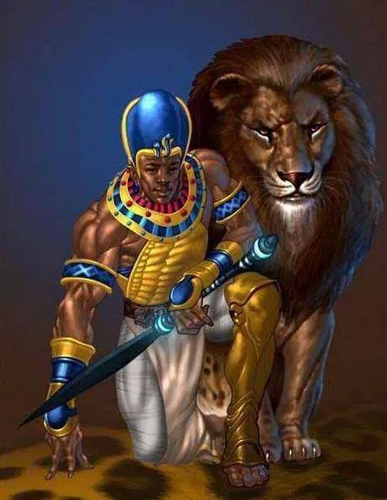
African Spirituality is African Spirituality. It is as simple as that! It cannot be called by any other name. Most Africans believe in an invisible Super Natural Being (God) with several deities. For example, among the Bassa of Liberia, beyond the Noah level or ancestral god, is the God’s domain. The High God is the credo, the foundation, and the source of all leadership power in Bassa spirituality. In praise, the Bassa would refer to God as Dehbioh, Bomo or Geledephoh, the Highest Lord or God. Additional descriptions are Ghan Geledephoh (God of Almighty), Dein-dein Geledephoh (God of Wonders), Dabain-de-po Geledephoh (God of Miracle), and in metaphor, Geledephoh Mohn badahvehneh nyon badian, meaning God is a vast, unavoidable swamp. The Bassa’s view is that there is a God, the Sky God or the Supreme God is the Creator and head of the universe, without Whom, there is no nothing. Africans do not worship dead relatives as people want us to believe. Ancestral reverence is a way of conferring the honor to deserving parents for all the sacrifices they made for us and for our future generations. Each time we speak the names of our ancestors and each time we revere them, we learn the secrets to immortality. Americans remember their dead relatives by erecting monuments in their honor and putting flowers on their graves annually, and setting aside one day (May 31) as a Memorial Day. On this day of remembrance Americans are reverencing their dead relatives for the sacrifices made for them. Even if we looked at other parts of the world, we would see similar practices. The Chinese have a centralized system for reverencing their dead relatives. Among the Mexicans, ancestral reverencing is a formal festival, “Dia de los muertos” or the “Day of the Dead.” During the celebration, food is prepared, flowers are bundled, and sacred music sung at burial sites of the ancestors to maintain the state of their spirituality. The Irish remember their dead too, especially St. Patrick, the patron saint, one of Christianity's most widely known figures. African worshipped God every moment of the day, not just on Sundays. Time was life; life was time as the saying went. Our daily life was time, which was an endless natural cycle that cannot be measured solely with some kind of mechanical device. Time allowed our people to build the past into the present and the present into the future. In other words, time was our total existence; so our tradition did not live by an artificial keeper or clock that pushed one from the true nature of God. Simply, our people did not work in the confinement of time but treated it as a communal commodity to benefit all people. Time also was associated with an event such as death, coming of the new moon (at this time our youth, playing in the moonlight, sent out their wishes to be fulfilled when the new moon returned). In addition, the place of worship was not limited to God’s courthouse and gate of heaven to the cathedral. If our people did not go into a house to pray, to Europeans, it meant that our people did not know God. Our tradition did not “house” God because God was nonresidential. Africans and Caucasians differ on the concept of saviorism; that was to be reborn in Christ as the only mean to God. In other words, man is a sinner. If he does not repent, he will die unconverted, forever away from God. African spirituality existed long time before the time Jesus first proclaimed his message in the home of Judas of Galilee, the founder of Zealotism, a Maccabean tradition of holy war, aggressive resistance, and inclination for martyrdom . African spirituality existed before the “Galilean Proclamation”, Jesus’ vision of the “Coming Kingdom of God”. Indeed, African spirituality existed for million of years before Pauline gospel of “Christ’s resurrection”; the Age of Inquisition—simply death and destruction of non-Christians, and Christendom, the amalgamation of all peoples and sovereigns under the Roman Popes.