A 21-year-old white man tried to start an American race war by spewing epithets and gunning down nine black worshippers last week. On Friday, however, something else was in the heart of 6,000 mourners who leaned on one another, sang, and wept while listening to the commander in chief's calls for progress.
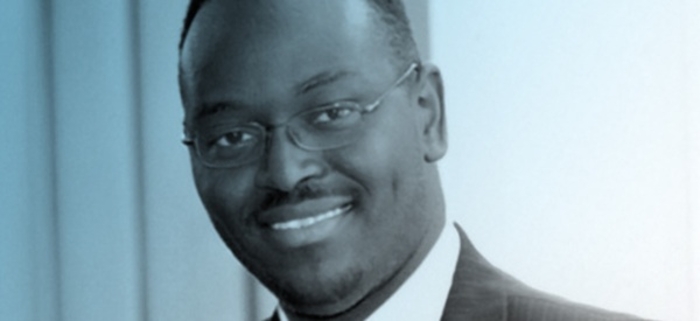
Obama praised Pinckney’s long commitment to serving his community—a swath of the South Carolina low country that has long struggled to overcome poverty—as a legislator (Pinckney was a state senator) and as leader of a congregation that has often blazed its own trail to freedom.
Obama described black life in America as a study in patience and inequality. He made calls to continue the fight against poverty that leaves children hungry, to avoid growing cynical in the struggle to improve gun control, and to save failing schools. The broad-spanning speech touched on slavery and the role of the church lovingly dubbed “Mother Emanuel” in fighting for equal rights from those days until the present.
“The church is and has always been the center of African American life...a place to call our own in a too-often hostile world. A sanctuary from so many hardships,” Obama said.
That sanctuary was violated June 19 when Dylann Roof, 21, opened fire after sitting in prayer with members of the congregation. Roof has confessed to the murders, according to officials, and the case is also being investigated as a hate crime. Friends have said Roof hoped to start a race war.
“The alleged killer could not imagine how the city of Charleston...how the United States of America would respond not only with revulsion at his evil act, but with big-hearted generosity, but with thoughtful introspection,” Obama said.
Instead of the nightmare Roof imagined, symbolic gestures of racial healing have cropped up around the country in the form of a new push to take down the Confederate flag from public places, recognizing that the divisive symbol has long troubled many with the inference that those who fly it believe the South was better off in a time when African Americans were enslaved.
“Removing the flag from this state’s capitol would not be an act of political correctness, it would not be an insult to the valor of Confederate soldiers. It would simply be an acknowledgement that the cause for which they fought, the cause of slavery, was wrong,” Obama said. “The imposition of Jim Crow after the Civil War, the resistance to civil rights for all people was wrong.”
Taking down the flag, Obama said, “would be one step in an honest accounting of America’s history, a modest but meaningful balm for so many unhealed wounds. It would be an expression of the amazing changes that have transformed this state and this country for the better.”
Obama also touched on other lasting issues of inequality in America. Incarceration rates for black men have skyrocketed in recent decades—along with early deaths, 1.5 million black men are missing from public life, according to an analysis from The New York Times.
His message was focused on the black community’s losses while remaining inclusive and expressed awareness that changes in race relations are not quickly won.
The president also cited gun control as a positive that might come from Rev. Pinckney’s death.
“This is a big, raucous place, America is, and there are good people on both sides of these debates. Whatever solutions we find will be necessarily incomplete,” Obama said, acknowledging that even new rules won’t prevent every death.
Mourners began lining up at the church at 3:30 a.m. to be assured of a seat in the packed house. Obama did not disappoint, surprising the audience in the auditorium and watching on TV and livestreams across the country by breaking into the classic hymn of the civil rights movement, “Amazing Grace,” as the speech’s coda.
It was a moment sure to be remembered as part of Obama’s legacy and in the history of American race relations—a moment of humility that brought tears.
Before the congregation took up the song, Obama sounded a note of equality for all. http://www.takepart.com/article/2015/06/26/obama-charleston
“Justice grows out of recognition of ourselves in each other,” Obama said. Recognition “that my liberty depends on you being free too, that history can’t be a sword to justify injustice or a shield against progress but must be a manual for how to avoid repeating the mistakes of the past.”