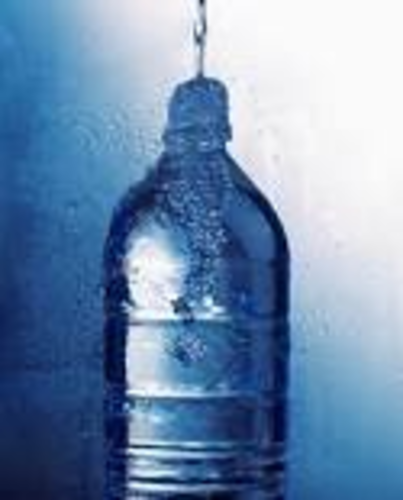
Over the past decade, bottled water has become an ever-present part of American life. You’ll find bottles of Dasani, Poland Spring, Evian, or Aquafina at the gym, in the checkout line at the grocery store, in the office. Sales of bottled water nearly doubled between 1997 and 2007, reaching about $11.5 billion. In 2007, Americans drank 29 gallons of water per capita.
But that’s begun to change. From a peak in 2007, bottled water consumption dropped in 2008, down by 3.8% from the previous year. Recently, cities, schools, natural food stores, and restaurants have begun to “buy local” -- offering tap water rather than bottled -- for environmental and economic reasons. For example, many of the mayors at a meeting of the U.S. Conference of Mayors voted to phase out the use of bottled water. And more and more individual consumers are following suit. Picking up a bottle of water at the supermarket or the gym is quick and easy, but it has its costs.
Bottled water is expensive. Depending on where you live, you’ll pay between $1 and $2 for the average 16-ounce bottle. (That’s between 240 and 10,000 times the cost of tap or filtered water.)
Bottled water is hard on the environment. Even though about 23% of plastic water bottles are recycled, that still leaves about 2 million tons of bottles pouring into landfills every year.
Bottled water isn’t necessarily purer than tap water. An investigation by the Environmental Working Group found chemical contaminants in every brand tested -- including disinfection byproducts, fertilizer residue, and pain medication.
What’s Really in Bottled Water?
In a lot of cases, bottled water is just tap water. The EWG report found that at least two distributors (Wal-Mart and Sam’s Club) were basically bottling and selling tap water, while many other major brands, including Dasani and Aquafina, distill or purify tap water for their product. If your bottle doesn’t say “spring water” on it, chances are the water came from a municipal water source.
In most cases, you really don’t need to buy bottled water. Municipal tap water is almost always safe to drink, experts say.
“It’s often a question of palatability -- a lot of municipal water has some residual chlorine taste,” says Craig Mains, an engineering scientist at the National Environmental Services Center at West Virginia University. “But there’s a lot you can do to improve the taste and quality of your tap water.”
Refrigerate. “Just putting a pitcher of water in the fridge for awhile will remove the chlorine taste that bothers many people,” Mains says.
..."Boil. If you’re worried about contaminants in your water, boiling the water is an inexpensive way to remove microbes.
Filter. There are many types of water filters available. You can buy water pitchers with built-in filters or filters to attach to your faucet. These are inexpensive options, ranging from $20 to about $60. Many refrigerators also come with filters for their water dispensers. Water filters can also make tap water safer for small children and people with compromised immune systems.
Mega-filter. You can buy a whole-house reverse osmosis filtration system from a company like Culligan for about $1,000, plus a monthly service cost that includes filter replacement. Culligan claims that this works out to about six cents per gallon of filtered water."...
You're making me thirsty...Smiles. Good tips!
Tuesday, August 6th 2013 at 11:08PM
MIISRAEL Bride
Very Useful Information. Thanks!
Friday, August 9th 2013 at 3:43PM
Phyllis M Alston
Thanks Ladies! I went on a Water Conservation Field trip with my little one's class and I learned that tap water is safe to drink, but was to,d to boil it instead of using bottled water if I wanted to be assured. After-all, boiling tap water is still cheaper than buying bottled water and is safer for the environment!