Has Anyone Heard of the New Breast Cancer Screening Tool Called the HALO Breast Pap Test ? (1580 hits)
The HALO Breat Pap Test Is a new screening tool could determine a young woman's risk for developing breast cancer down the road. The HALO® Breast Pap Test collects evaluated the lining of the ducts, where roughly 95 percent of breast cancers start.
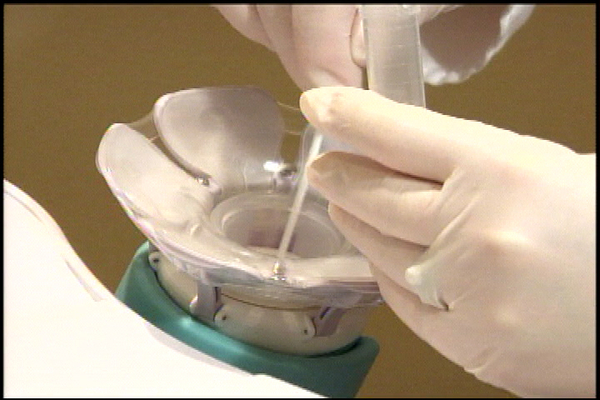
Predicting Risk for Breast Cancer: HALO® Now there’s a test that may aid doctors in more accurately predicting which women are at higher risk for developing breast cancer. It’s an in-office system, called the HALO® Breast Pap Test. The HALO system uses warm heat, massage and gentle suction to pull fluid from the ducts in the nipples into a collection chamber. This fluid contains cells that are shed from the lining of the ducts, where 95 percent of breast cancers start. It takes about five minutes to collect the fluid, which is then sent to a lab. Analysis of the fluid can determine whether there are any abnormal cells present.
Gittleman says if no abnormal cells are present and the woman has no risk factors, the probability of developing breast cancer is very small. However, if abnormal cells are discovered, that information is combined with other risk factor assessments to come up with a total risk score. Depending on the level of risk, a physician may take one of several options:
further assessment of risk and counseling for preventive measures/early detection, diagnostic mammogram or other type of imaging procedure, or (for high risk women) use of preventive medications, like tamoxifen, or more invasive screening procedures (like ductoscopy or ductal incision).
The HALO test is quick and non-invasive. Gittleman says it can be done in a doctor’s office, surgeon’s office or breast imaging center. He recommends having it done once a year, just like an annual PAP test for cervical changes, starting at around age 30. According to the manufacturer, about 50 to 80 percent of women produce nipple fluid. Those who do not are considered to be at normal risk for breast cancer.
Gittleman cautions that HALO is not a substitute for mammography because risk factors can change and breast cancer can develop in other areas of the breast. Thus, women should have regular mammograms, as recommended by their physician. While HALO is FDA approved, it is not yet covered by most insurance companies. Some researchers say more studies need to be done to assess the benefits of HALO in predicting breast cancer risk.
This sounds less painful than the pressing machine is what I call it. My first Mammo was a bad experience and I did the alternative method. I will have to inquiry about this procedure to see if its available. thanks for sharing. Also, I want to share this information for breast cancer patients: FREE Professional Maid Service for Women Undergoing Cancer Treatment. Fighting cancer is difficult enough, but living with it is even tougher - and that's where the Cleaning for A Reason Foundation steps in. This nonprofit offers free professional housecleaning, and maid services to improve the lives of women undergoing treatment for cancer - any type of cancer. http://bit.ly/htjnB0 Wednesday, March 2nd 2011 at 4:54AM
Yolanda Parson
..."Gittleman cautions that HALO is not a substitute for mammography because risk factors can change and breast cancer can develop in other areas of the breast. Thus, women should have regular mammograms, as recommended by their physician."...
Thanks for your comments to this blog and the maid service because this is what its about being able to share and learn from one another, eh! I just want to add that the HALO isn't a replacement for the Gold Standard (Mammography). Much love Sister Yolanda!
Wednesday, March 2nd 2011 at 10:12AM
Jen Fad