HOW NAMI-MN HOSTS ANNUAL RESEARCH DINNER, ONLINE MENTAL HEALTH CLASSES, CEU CREDITS, AND MORE ... (929 hits)
For Immediate Release From NAMI-Minnesota!
(A Ten-Minute Read)
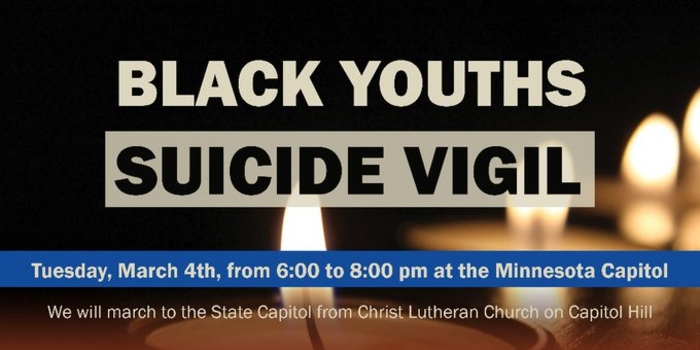
NAMI Minnesota is honored to be able to host a vigil for Black youths that have died by suicide. This event will be held at the Capitol Mall in St. Paul from 6:00-8:00 PM on Tuesday, March 4th. We encourage you to stand with us, lean on us, and be with us.
WHERE: Delta Hotels by Marriott Minneapolis Northeast
FEE: $55.00
Join us on Tuesday, February 25, for NAMI Minnesota and the University of Minnesota's Annual Research Dinner at Delta Hotels by Marriott Minneapolis Northeast.
The $55 cost includes dinner with an entrée, salad, and dessert.
"Child Mental Health Crisis: Better Resilience Is The Solution, Say Experts"
Jane Graham has been a school nurse for nearly 20 years – and during this time the nature of her work has completely changed. "When I started, the majority of the support we provided was for physical health, like asthma, allergic reactions and injuries," she says. "Now it's mental health."
She has seen a surge in schoolchildren struggling. "It really impacts pupils at secondary school, but some are as young as seven," she explains.
"We're seeing children with depression, anxiety and stress – and that's leading to panic attacks, self-harm and eating disorders. They're not making it to school or are so anxious they cannot attend classes."
GPs, youth workers and social workers I have spoken to shared similar stories, with many pointing out that mental health cases in the young are rising in ever greater numbers.
One in five children and young people between the ages of eight and 25 in England are now thought to have a mental health disorder, according to official figures. Unsurprisingly, the NHS is struggling to keep up.
In 2024 Dame Rachel de Souza, the children's commissioner for England, described the situation as "shocking" and said the system was in "crisis".
But it is not just a crisis that is placing demands on the health service. It's also depriving the economy of workers with rising numbers of young people being left unable to work.
Plenty of explanations have been offered by experts: the pandemic, the cost of living and the advent of social media have all placed additional pressures on the generation now starting out.
But some experts in the field of mental health have raised another question: that is, is there really a mental health crisis or are young people simply not resilient enough?
In other words, are they lacking the capacity to withstand or recover quickly from day-to-day difficulties that generations before them faced too?
A polarising debate This question is a polarising one. The word resilience could be interpreted by some as disparaging, or even toxic, in a similar vein as the term "snowflake generation".
But one of the country's leading experts in child and adolescent psychiatry, Prof Andrea Danese, from King’s College London, believes that resilience needs to be taken seriously.
While greater awareness of mental health "has generally been a positive thing", according to Prof Danese, who is general secretary for the European Society of Child and Adolescent Psychiatry, he says that he is concerned that it may also have "inadvertently contributed to over-pathologising distress in young people".
Distress should not automatically be seen as a sign of mental ill-health, he continues.
"Facing challenges and distress is normal and important in terms of individual growth," he says. "That's how young people develop emotional resilience – they learn coping skills in the face of many small challenges and build self-confidence about their ability to cope. The narratives we build matter."
Ms Graham, the school nurse, is also of the opinion that many children who she has seen struggling - particularly those with more low level mental health problems - would benefit from becoming more resilient.
She believes that if they were equipped with better coping skills, young people would likely be better placed to deal with the challenges they may be facing before they develop into a full-blown crisis – and this in turn would help ease the pressure on services to focus on those who are at high risk of harm.
"We need to do much better at teaching resilience in schools and how to stay mentally healthy," she says. "But the way we treat children, such as primary school sports days where everyone is declared a winner, doesn't help."
Resilience in popular culture In popular culture, the concept of resilience was popularised in the 1970s, in the wake of research by psychologist Emmy Werner, who studied children in Hawaii from lower-income backgrounds.
More recently it has been the subject of several bestselling books, including Option B: Facing Adversity, Building Resilience and Finding Joy, co-authored by Sheryl Sandberg, who was previously chief operating officer at Meta.
Research by academics carried out in Poland suggests that higher levels of resilience improve life satisfaction and act as a buffer against mental health problems among young people.
Two studies involving young people aged between 13 and 18 found those with greater resilience were more able to develop their own coping strategies when dealing with stress, including seeking support and advice from others, and were less likely to dwell on negative emotions or turn to drugs, alcohol or smoking.
People with schizophrenia may seem like they have lost touch with reality. Schizophrenia is not as common as other mental disorders, but the symptoms can disrupt everyday life. Know the signs and symptoms.
Schizophrenia
What is schizophrenia? Schizophrenia is a serious mental illness that affects how a person thinks, feels, and behaves. People with schizophrenia may appear to have lost touch with reality, which can be distressing for them and their family and friends. The symptoms of schizophrenia can make it difficult to participate in usual, everyday activities, but effective treatments are available. Treatment can help people remain in school, maintain employment, achieve independence, and enjoy personal relationships.
What are the signs and symptoms of schizophrenia? It’s important to recognize the symptoms of schizophrenia and seek help as early as possible. People with schizophrenia are usually diagnosed between the ages of 16 and 30, after the first episode of psychosis. Starting treatment as soon as possible following the first episode of psychosis is an important step toward recovery. However, research shows that gradual changes in thinking, mood, and social functioning often appear before the first episode of psychosis. Schizophrenia is rare in younger children.
Schizophrenia symptoms can differ from person to person, but they generally fall into three main categories: psychotic, negative, and cognitive.
Psychotic Symptoms
Psychotic symptoms include changes in the way a person thinks, acts, and experiences the world. A person experiencing psychotic symptoms often has disrupted thoughts and perceptions, and they may have difficulty recognizing what is real and what is not. For some people, these symptoms come and go. For others, the symptoms become stable over time. Psychotic symptoms include hallucinations, delusions, and thought disorder.
Hallucinations are when a person sees, hears, smells, tastes, or feels things that are not there. Hearing voices is common among people with schizophrenia. People who hear voices may hear them for a long time before family or friends notice a problem.
Delusions are when a person has strong beliefs that are not objectively true and may seem irrational to others. For example, individuals experiencing delusions may believe that people on the radio and television are sending special messages that require a certain response, or they may believe that they are in danger or that others are trying to hurt them.
Thought disorder is when a person has ways of thinking that are unusual or illogical. People with thought disorder may have trouble organizing their thoughts and speech. They may stop talking in the middle of a thought, jump from topic to topic, or make up words that have no meaning.
How to Stay on Track With Your Health Goals in Colder Weather
Exercising and eating well can be challenging during fall and winter, thanks to seasonal stress and temptations. But you can stay on track with some planning and flexibility.
As the weather gets colder, the days get shorter, and the holidays approach, sticking to your diet and exercise routine can be tough. But staying healthy during the fall and winter can help you manage seasonal stress well into the new year.
Start now by being flexible, setting realistic goals, and finding enjoyable cold-weather activities, says Chris Pruitt, a certified personal trainer and CEO at WorkoutHealthy, based in Clarksburg, Maryland. “It’s essential to adapt your routine to fit the season and keep it engaging,” he says.
Read on to learn more expert-backed strategies for fall and winter wellness.
Lean Into Different Types of Exercise You might not be able to enjoy your favorite summertime activities year-round, but you can still find plenty of ways to stay active. Even if you’re buried in schoolwork, holiday tasks, or an actual snowstorm, you always have opportunities to move your body.
“Being flexible with your routine is crucial to sustainable habits,” says Dana Angelo White, a registered dietitian nutritionist, certified athletic trainer, and cookbook author based in Fairfield, Connecticut.
NAMI Minnesota is excited to present two free expert-led online sessions on critical mental health topics: "The Link Between Psychiatric Conditions and Insomnia" and "Self-Injury in Adolescents." Each session is approved for 1 CEU.
Free Continuing Education Speaker Series for Social Workers: Earn CEUs and expand your expertise with NAMI Minnesota.
Understanding the Link Between Psychiatric Conditions and Insomnia: A Stepped Care Approach for Cognitive Behavioral Therapy for Insomnia
Insomnia is a common issue among individuals with psychiatric conditions, often intensifying symptoms and complicating treatment. Join Dr. Mark Rosenblum as he explores the relationship between psychiatric disorders and insomnia, introducing a stepped care approach for Cognitive Behavioral Therapy for Insomnia (CBT-I).
Attendees will:
Gain a deeper understanding of the impact of insomnia on mental health. Learn an abbreviated version of CBT-I to implement immediately in practice. Understand when to refer patients to higher levels of care. Receive a curated list of CBT-I resources, including bibliotherapy materials, websites, web apps, and a directory of local providers. CEUs: This session is approved for 1 CEU for social workers.
Understanding Self-Injury in Adolescents
Presenter: Dr. Kathryn Cullen, Professor, Department of Psychiatry and Behavioral Sciences, University of Minnesota Date: Friday, February 28, 2025 Time: 12:00 – 1:00 PM Register Here
Session Overview:
Why do some young people engage in intentional self-injury? What does it signify, and how can professionals help? In this session, Dr. Kathryn Cullen will share key insights from recent research on non-suicidal self-injury (NSSI) in adolescents.
Attendees will:
Explore the latest research on adolescent self-injury. Understand the psychological and neurodevelopmental factors involved. Learn strategies to support and intervene effectively. CEUs: This session is approved for 1 CEU for social workers.
Secure your spot today! These virtual sessions offer valuable insights and practical tools for social workers committed to enhancing their understanding and treatment of complex mental health issues. Don’t miss this free opportunity to learn from leading experts in the field.
NAMI Minnesota offers online mental health classes designed specifically for parents and caregivers. Reserve your spot today and take a step toward supporting your child's mental health:
Ending the Silence is a 50-minute class for high school students that talks about mental health, suicide prevention, where to get help, and how to end the silence around mental illness. If you want to schedule a class or learn more, please email Renée Labat at rlabat@namimn.org