Nutritional Qualities and Proven Health Benefits of Pomegranate (3082 hits)
Pomegranate is a unique fruit that's long been used in traditional medicine to treat a wide variety of ailments. In whole and juiced form, pomegranate houses large amounts of polyphenols that possess potent antioxidant properties. In fact, due to its overall nutritional composition, regular consumption of pomegranate can greatly reduce the risk and effects of a host of lifestyle-related chronic disease and other disorders.
What is Pomegranate?
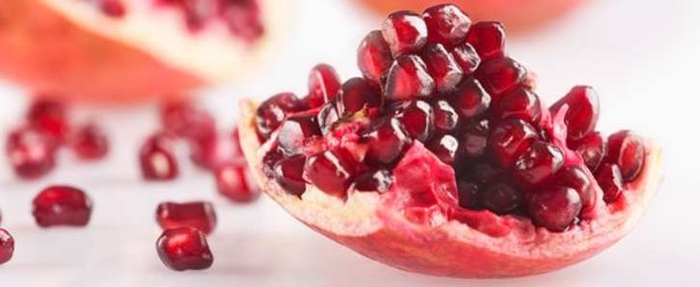
Pomegranate (punica granatum) is a deep red fruit with firm edible arils (seeds) that is widely cultivated around the world in tropical, subtropical and temperate regions. Grown into a distinctive shrub (small tree) spanning 20-30 feet, pomegranate is multi-branched, somewhat spiny and extremely long-lived. In fact, this remarkable fruit has the potential to produce at peak for an average of 15 years. Fully ripened pomegranate is 2-5 inches in diameter and grenade-shaped with leathery skin. Like other types of fruit, it's a rich source of dietary fiber and vitamin C with sizeable amounts of other essential vitamins and minerals.
How is Pomegranate Consumed?
Pomegranate is largely consumed in raw form. The freshest, ripest pomegranates are usually available at local farmer's markets or co-ops that receive deliveries directly from farmers and farm stands. Its seeds are incredibly versatile, as they can be eaten as a stand-alone stack or added to salads and soups, cereals and homemade baked goods (whole grain breads, bran muffins and desserts). In addition, pomegranate juice, prepared by liquefying seeds, can be used in jams, jellies, beverages (teas and smoothies), and concentrated in syrups and liqueurs… Read the rest of the benefits here: http://nutrition.answers.com/organic-foods...