BREAKING: Former South African President Nelson Mandela’s Kin Face Gray Area on Ending Life Support (581 hits)
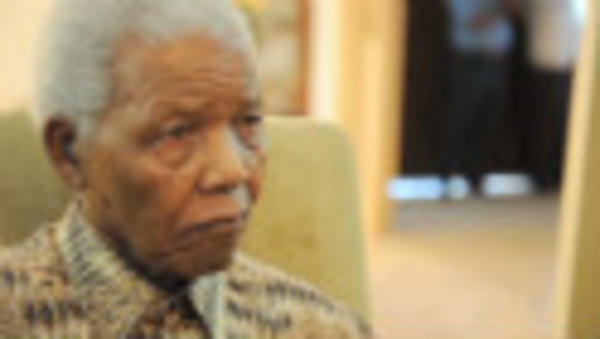
JOHANNESBURG — The family of Nelson Mandela, who has been lying at the edge of death in a South African hospital for more than a month, might in the days or weeks to come face the same awful decision that has confronted numerous other families in an age of life-sustaining miracle machines: when is it time to say “enough.”
This must be painful for the family and supporters. I am praying for all involved.
Wednesday, July 17th 2013 at 9:01AM
MIISRAEL Bride
I woke up thinking about 'Mandiba' this morning. I have witnessed as well as taken care of people in Critical Care who are kept alive on life support when their bodies finally shuts down in spite of the artificial medical means and kicks the soul and spirit out.
I spoke with my husband briefly this morning the practical reality for both the families, but more so the patient(s) in ICU as well as Mr. Mandela to die without the dignity they deserve; Mr. Mandela after sacrificing so much for the freedom of his people should die with dignity. Believe me when I say having someone clean you up after a dirty diaper is un dignified.
When my aunt ( God rest her soul) was on life support and had been brought back to life with CPR by the doctors and nurses twice, I told my relatives to please let her go especially since she had told her daughter, who is also a nurse that she didn't want a tracheotomy ( artificial hole in the throat to help breathing ). It was a difficult decision for us all especially her 85 year old mother, now 91. I miss my aunt, but she's out of the pain and suffering now.
'Death Talk' Difficult on Both Ends of Stethoscope
Talking to patients and families about end-of-life planning is never easy, but approaching the conversation with some basic ground rules may ease the tension, Canadian researchers report. Identifying at-risk patients is the first task, but one that should be quickly followed by a frank discussion with those patients and their families, wrote John J. You, MD, MSc, of McMaster University, Hamilton, Ontario, and colleagues in an article published online by CMAJ.
Based on a review of some 60 published papers, the authors devised an algorithm for discussing end-of-life decisions, and ...Once a patient is identified, the clinician needs to assess that patient's readiness for such a sensitive conversation, they and determine whether he or she has engaged in similar discussions with other clinicians. Information exchange and decision-making should come next, using these key discussion points to guide the conversation:
• Discuss the risks and expected outcomes of various treatment options for the current illness
• Clearly communicate the patient's prognosis (which may include a prediction of life expectancy) based on objective criteria
• Elicit the patient's wishes, perceptions, and values
• Identify and involve substitute-decision makers (e.g. close family members)
• Reach a decision through discussion and deliberation
• Clearly document the patient's wishes in the medical record, using specific examples and if possible the patient's own words.
Goal setting is as important at end-of-life as at any other time, and to this end, the collaboration among patient, family and clinician is essential, the authors wrote. A key example to consider is the use of CPR, cardiopulmonary resuscitation. Overall in-hospital survival after CPR is about 10-15%, the authors report, and among the sickest patients (such as those in the ICU), survival is only 1 to 5%. Undergoing CPR is often the "default" decision for most patients, yet its indiscriminate use may lead to prolonged suffering, increased disability and diminished quality of life, all without any further ability to reverse the underlying cause of illness.
Joel Zivot, MD, medical director of the cardiothoracic intensive care unit at Emory University Hospital in Atlanta, advocates for transparency and honesty in all discussions related to goals of care. "I reveal how the game is played to patients," Zivot says. He explains that everyone involved in these end-of-life discussions, including the physicians, have their own personal beliefs and biases. Rarely is there a clear right answer. "When patients ask me, 'What would you do, doctor?', I tell them, 'It doesn't matter what I would do. What would you do? Let's figure it out together.'"
The American College of Critical Care Medicine (ACCM) supports this process of shared decision-making and also underscores the importance of caring for both the patient and the family. ... Finally, You and colleagues note that there is abundant research to support the value of end-of-life planning, but they caution that it may not be feasible to address all the topics during a single encounter. Instead, they recommend that clinicians use judgment and flexibility in engaging patients and family members in a series of discussions.
Jen this is wonderful information. "It's worth it to know as well." There is a similar outline that is followed at my place of employment that inacts with the concept of dying called "Dying Well" the person gets to make out his or her own will, and have the family partake in arrangements and things which mayhave the take a passing of life as a somewhat "easing less painful experience." I think it's great for those who may have a difficult time with coping with death of themselves and of others. You know I thank you that. What a excellent informant you are. :-)
I too, was thinking of Brother Mandela this morning! ^^PRAYERS.
Nor would I. Let me pass on. I think it prolongs the waiting; and causes some even more grieving to see me just laying there unresponsive. If I've finished my life in Jesus in this present world, I am ready for the eternal kingdom!!!
Wednesday, July 17th 2013 at 9:00PM
MIISRAEL Bride