Lest We Forget: 57th Anniversary of Brown v. Board of Education (1079 hits)
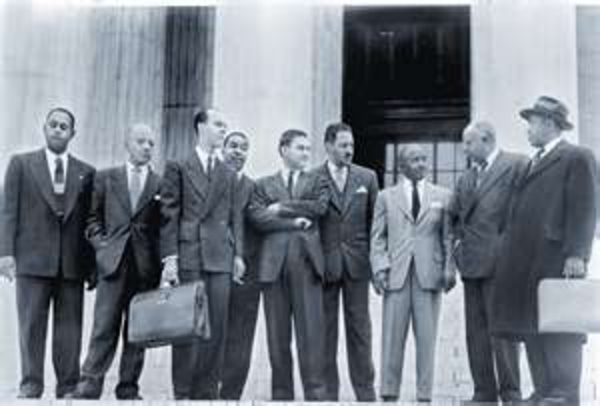
Today marks the 57th Anniversary of the momentous US Supreme Court decision in Brown v. Board of Education of Topeka, KS. For civil rights activists, this was a watershed case because it struck down the "separate but equal" doctrine enunciated in Plessy v. Ferguson and ushered in the era of 'integration' in public education. The case was argued by then NAACP General Counsel, Thurgood Marshall, who later became the first African-American to serve as a justice on the nation's highest court.
Another interesting aspect of the Brown case is it was the first case in which the Supreme Court accepted the use of social science data as evidence. This was pivotal because in order for the NAACP to prevail, it had to show that African-American children had suffered some harm as a result of being denied access to traditionally Caucasian schools funded through federal, state and/or local funds.
The task of providing evidence of the harm African-American children experienced by being excluded from whites only schools fell to Dr. Kenneth Clarke, a noted social scientist. In establishing proof of harm, Dr. Clark and his wife, Mamie, developed an experiment using black and white dolls. They then interviewed dozens of black children to determine which doll each child had more of an affinity to. The overwhelming results of the experiment demonstrated that black children had more of an affinity to the white doll than dolls of their own race (http://www.loc.gov/exhibits/brown/brown-brown.html.).
It is important to note that the decision of the court was 9-0 in favor of the NAACP. Then Chief Justice Earl Warren wrote the history-making opinion.
Today, I salute The NAACP, its Legal Defense Fund, the battery of lawyers and support staff, Drs. Kenneth and Mamie Clark, the Supreme Court Justices who heard the case, the plaintiffs, and everyone who played a part in this case.
We owe them a tremendous debt of gratitude, lest we forget.