Talk Doesn’t Pay, So Psychiatry Turns Instead to Drug Therapy (830 hits)
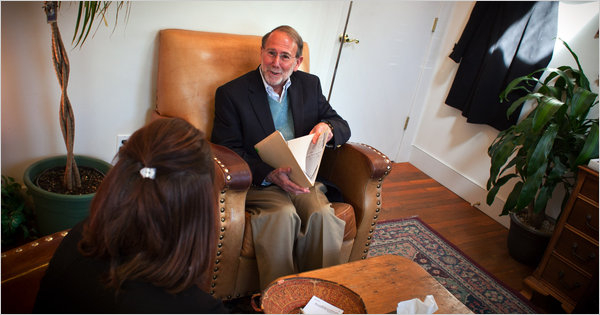
DOYLESTOWN, Pa. — Alone with his psychiatrist, the patient confided that his newborn had serious health problems, his distraught wife was screaming at him and he had started drinking again. With his life and second marriage falling apart, the man said he needed help. But the psychiatrist, Dr. Donald Levin, stopped him and said: “Hold it. I’m not your therapist.
I could adjust your medications, but I don’t think that’s appropriate.” Like many of the nation’s 48,000 psychiatrists, Dr. Levin, in large part because of changes in how much insurance will pay, no longer provides talk therapy, the form of psychiatry popularized by Sigmund Freud that dominated the profession for decades. Instead, he prescribes medication, usually after a brief consultation with each patient. So Dr. Levin sent the man away with a referral to a less costly therapist and a personal crisis unexplored and unresolved.
Medicine is rapidly changing in the United States from a cottage industry to one dominated by large hospital groups and corporations, but the new efficiencies can be accompanied by a telling loss of intimacy between doctors and patients. And no specialty has suffered this loss more profoundly than psychiatry. ...Missing the Intrigue ...He looked for a psychiatrist who would provide talk therapy, write prescriptions if needed and accept his insurance. He found none. He settled on Dr. Levin, who persuaded him to get talk therapy from a psychologist and spent months adjusting a mix of medications that now includes different antidepressants and an antipsychotic. The man eventually returned to work and now goes out to movies and friends’ houses.
The man’s recovery has been gratifying for Dr. Levin, but the brevity of his appointments — like those of all of his patients — leaves him unfulfilled. “I miss the mystery and intrigue of psychotherapy,” he said. “Now I feel like a good Volkswagen mechanic.” “I’m good at it,” Dr. Levin went on, “but there’s not a lot to master in medications. It’s like ‘2001: A Space Odyssey,’ where you had Hal the supercomputer juxtaposed with the ape with the bone. I feel like I’m the ape with the bone now.” The switch from talk therapy to medications has swept psychiatric practices and hospitals, leaving many older psychiatrists feeling unhappy and inadequate.