https://www.youtube.com/live/oveXLxSBkYQ
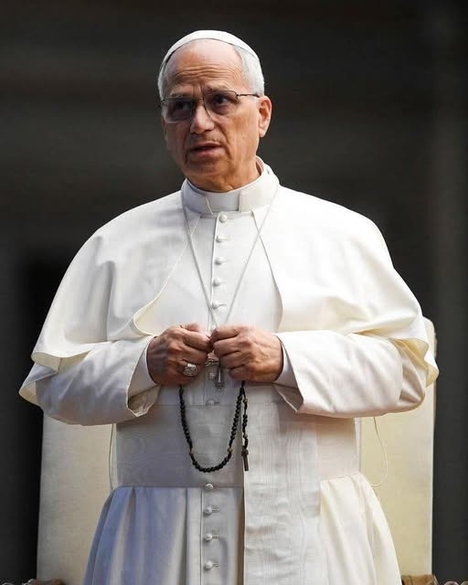
HOW PONTIFF LEO'S LENT MESSAGE IS TO AVOID HARSH WORDS..; PRAYING FOR CYCLONE VICTIMS; RADIO AND AI;
For Immediate Release From Vatican News!
(A Fifteen-Minute Read)
Pontiff’s Lenten Message: Abstain From Harsh Words And Rash Judgement
Ahead of the start of Lent, Pope Leo XIV invites Catholics to open ourselves to listening, fasting, and community, urging us to abstain from words of hatred in order to make space for words of hope and peace. By Devin Watkins
“I would like to invite you to a very practical and frequently unappreciated form of abstinence: that of refraining from words that offend and hurt our neighbor.”
Pontiff Leo XIV made that invitation at the heart of his message for Lent 2026, which was released on Friday.
As Lent begins on Ash Wednesday, February 18, the Pontiff said this liturgical season offers Christians an opportunity to place the mystery of God back at the center of our lives.
Every journey of conversion, he said, begins by letting God’s word touch our hearts, so that we may renew our commitment to follow Christ in the mystery of His saving passion, death, and resurrection.
Pontiff Leo focused on the importance of listening to God and to those around us, allowing ourselves to enter into authentic relationships.
“In the midst of the many voices present in our personal lives and in society,” he said, “Sacred Scripture helps us to recognize and respond to the cry of those who are anguished and suffering.”
Christians, said the Pope, can cultivate inner openness to listening, as God does, by growing in awareness that the poor challenge our lives and economic systems, as well as the Church.
Pontiff Leo XIV then turned to how fasting helps open us to the deep desire for justice, which he said frees us from complacency.
“Precisely because it involves the body, fasting makes it easier to recognize what we ‘hunger’ for and what we deem necessary for our sustenance,” he said. “Moreover, it helps us to identify and order our ‘appetites,’ keeping our hunger and thirst for justice alive”.
Fasting, he added, teaches us to govern our desire by purifying, freeing, and expanding it, in order to direct our desire toward God and good deeds.
However, we must fast in faith, humility, and communion with the Lord, and not in a way that leads to pride, said the Pope, adding that other forms of self-denial also lead to a more sober lifestyle.
Pontiff Leo then pointed to an under-appreciated form of abstinance, which is refraining from hurtful words.
“Let us begin by disarming our language, avoiding harsh words and rash judgement, refraining from slander and speaking ill of those who are not present and cannot defend themselves,” he said. “Instead, let us strive to measure our words and cultivate kindness and respect in our families, among our friends, at work, on social media, in political debates, in the media and in Christian communities.”
If we do so, we will let words of hatred “give way to words of hope and peace.”
Read the full article HERE: https://www.vaticannews.va/en/pope/news/20...
********
Growing Concerns Over Water, Sanitation And Hygiene In Madagascar
Cyclone Gezani has become the second major storm to strike Madagascar this year, arriving just 10 days after Tropical Cyclone Fytia killed 14 people and displaced more than 31,000. By Nathan Morley
Cyclone Gezani has become the second major storm to strike Madagascar this year, arriving just 10 days after Tropical Cyclone Fytia killed 14 people and displaced more than 31,000. Authorities said that assessments are still underway, but the storm has so far left 38 people dead and 374 injured.
Gezani made landfall Tuesday near Toamasina, the country’s main port, where many victims were killed when homes collapsed, according to the National Office for Risk and Disaster Management. Officials described “total chaos” in the impact zone.
Entire neighborhoods lost power as lines came down, trees were uprooted and roofs were torn away. As many as 250,000 people have been affected or displaced.
Alongside urgent food needs, the United Nations warned of growing concerns over water, sanitation and hygiene, noting that damaged infrastructure and limited access to clean water heighten the risk of disease outbreaks.
Cyclone season in the Indian Ocean typically runs from November to April, with Madagascar experiencing roughly a dozen storms each year.
Read or listen to the full article HERE: https://www.vaticannews.va/en/world/news/2...
********
Colombia's Bishops Appeal For Peace And Reconciliation In The Country
Colombia's bishops concluded their 120th Plenary Assembly with a call to the country for conversion and dialogue. The bishops also urged citizens to take part in the upcoming elections, exercising their right to vote “in full freedom and conscience, without corruption.” By Davide Dionisi
The entrustment of Colombia to the intercession of Our Lady of the Rosary of Chiquinquirá, patroness of the country, and the commitment to continue walking alongside the people in the search for reconciliation, justice, and peace marked the conclusion of the 120th Plenary Assembly of the Colombian Bishops. The gathering concluded on Friday, February 13, in Bogotá, after five days of intense work.
The final document approved by the bishops invites the people to conversion, dialogue, and responsible participation in democratic life, while at the same time reaffirming the bishops’ closeness and support for the most vulnerable, especially during the most difficult period of the year, the winter season. In this regard, on Sunday, February 15, the Christian Communication of Goods Campaign will begin, promoting initiatives in favor of the neediest families, particularly those affected by flooding. This annual collection promoted by the Church for the most vulnerable usually begins on the First Sunday of Lent.
Conversion And Reconciliation
With the beginning of Lent approaching, the Episcopal Conference urged people to take “authentic steps of conversion” and to accept Christ’s invitation “to return to friendship, to join hands, and to seek unity.” In this perspective, reconciliation is understood not as an abstract concept but as a concrete path of personal and social healing.
For their part, the bishops reaffirm their commitment to continue offering their contribution “to forgiveness, reconciliation, and peace in the country,” and invite all Colombians to “build bridges across the differences and opposing positions that divide us,” promoting encounter, listening, and mutual recognition as members of the same family.
Closeness To Priests
The bishops also expressed gratitude to priests for “their presence throughout the national territory and for their valuable service,” which “accompanies and nourishes the faith, hope, and charity of the communities entrusted to them.” The formation and accompaniment of priests, they continued, “is one of the primary duties,” and for this reason they will continue to dedicate themselves to “caring for their overall well-being so that they may exercise their ministry in truth with renewed dedication.”
Direct Appeal To Members Of Society
The bishops further urged Colombians “to be builders of peace and witnesses of hope.” To children, adolescents, and young people, they recommend cultivating friendship with Jesus Christ, who enables them to be happy by loving as He loves, caring for creation, and building the country they dream of.
To families, described as “fundamental schools of social virtues,” they ask them not to tire of loving and serving life. To state institutions, they encourage the continued promotion of respect for human rights, the fulfillment of civic duties, and the strengthening of democracy and the institutions that support it. They also urge the government to “strengthen dialogue with all in order to effectively promote reconciliation and overcome radical fragmentation in social and political life.”
Read the full article HERE: https://www.vaticannews.va/en/church/news/...
********
Pontiff Appoints Sr. Simona Brambilla A Member Of Dicastery For Bishops
Pontiff Leo XIV has appointed Sister Simona Brambilla as a Member of the Dicastery for Bishops, as she continues her service as Prefect of the Dicastery for Institutes of Consecrated Life and Societies of Apostolic Life.
Pontiff Leo XIV has appointed Sister Simona Brambilla as a Member of the Dicastery for Bishops. The Holy See Press Office announced the appointment on Saturday, February 14.
Turning sixty-one on March 27, the Italian-born religious sister from the Consolata Missionaries has served as Prefect of the Dicastery for Institutes of Consecrated Life and Societies of Apostolic Life since January 2025.
Sister Brambilla now joins two other women: Sister Raffaella Petrini, President of the Pontifical Commission for Vatican City State and of the Governorate, and María Lía Zervino, former President of the World Union of Catholic Women’s Organisations.
They were appointed by Pope Francis as members of the Dicastery for Bishops in July 2022 and confirmed today by Pope Leo XIV.
Together, they are called to offer their contribution to the work of the Dicastery that deals with all matters concerning the appointment of diocesan and titular Bishops, Apostolic Administrators and, in general, the provision of the particular Churches.
Read the full article HERE: https://www.vaticannews.va/en/pope/news/20...
********
Pontiff: Christian Faith Is Lived In Charity, Adapted To Contemporary Needs
Pontiff Leo XIV meets with members of the National Confederation of the Misericordie of Italy, and encourages lay people to live out the Christian faith in acts of charity that respond to the needs of our times. By Devin Watkins
The roots of the National Confederation of the Misericordie of Italy date back to the 13th-century, when St. Peter of Verona led several lay Catholics to embrace a path of service and devotion in the midst of conflict within the Church and Italian society.
Pontiff Leo XIV met with members of the Italian voluntary organziation at an audience in the Vatican on Saturday.
In his address, the Pontiff recalled the Misericordie’s centuries-old history, which is rooted in spirituality, charity, and attention to contemporary needs.
Spirituality lies at the organization’s foundation, he said, noting that its members’ devotion and service spread throughout Italy in the 13th century, before taking root in Portugal and then the Americas.
“The seed from which the great tree of which you are part has sprouted and grown is therefore sacramental in nature—it is founded on Baptism—and therefore moral and ascetical,” he said.
The Pontiff invited the confederation of confraternities to cultivate the Christian formation of its members through prayer, catechesis, and fidelity to the Sacraments, especially Sunday Mass and Confession.
He praised the introduction of the “Custodians of Mercy” in the group, which are lay people who animate and form other lay people in their journey of faith.
“Their ministry,” he said, “is exercised and received in a climate of co-responsibility, affectionate belonging, and communion, in which all are protagonists in a common effort to grow in Christian perfection.”
Pontiff Leo then invited the Misericordie’s members to engage in selfless works of charity, as they have throughout their lengthy history.
The Misericordie are present in situations of war or natural disasters, he said, and they bear witness to the Gospel of charity among all elements of society.
“You do not limit yourselves to ‘doing for,’ but you commit yourselves to ‘walking with,’ recognizing in others brothers and sisters, each with their dignity and their story,” he said.
The Pontiff went on to uphold the confederation’s constant adaptation to the needs of the times, always working in communal zeal for the good of others.
Read the full article HERE: https://www.vaticannews.va/en/pope/news/20...
********
Pope Abolishes Committee For World Children’s Day
Pontiff Leo XIV publishes a chirograph abolishing the Pontifical Committee for the World Children’s Day, established by Pope Francis in 2024. By Salvatore Cernuzio
After placing the Pontifical Committee for the World Children’s Day under the Dicastery for Laity, Family, and Life last August—changing its status as an entity directly under the Holy Father—Pope Leo XIV abolished the Committee with a chirograph published today, February 13.
This Committee was established by Pontiff Francis in November 2024 with the task of handling the “ecclesial animation and pastoral organization” of World Children's Day. This was an event that followed in the footsteps of World Youth Day and brought thousands of children from around the world to Rome for an event of music, faith, and testimony.
Responsibility Transferred To The Dicastery For Laity, Family, and Life
The initiative will continue to be celebrated, with the second edition scheduled in Rome from September 25 to 27, 2026, as Pontiff Leo announced last November.
However, the responsibility for organizing and coordinating the event has now been entirely transferred to the aforementioned Dicastery, led by Cardinal Kevin Farrell. “The Dicastery for Laity, Family, and Life is responsible for all matters that were previously under the authority of the Pontifical Committee,” reads the letter.
Promoting Synergies and Efficiencies
The decision, Pontiff Leo explains, continues the direction set with the rescript of August 2025 and “aims to further promote synergies and more effective work for the realization of this noble initiative, after having consulted appropriately.”
Pontiff Leo also abolishes the founding chirograph and the related statute of the Pontifical Committee. Additionally, “any acts and regulations previously adopted” by the Committee are also revoked, and they “cease to have legal effects in both the canonical and civil orders.” Furthermore, the president, vice president, and other members of the Committee will immediately cease their roles.
Read the full article HERE: https://www.vaticannews.va/en/vatican-city...
********
Radio and the challenge of artificial intelligence
World Radio Day, promoted by UNESCO, is focused this year on voice and AI, exploring the connection between people and communities as part of the DNA of Guglielmo Marconi's invention. This is a value that no Artificial Intelligence will ever be able to replace, according to Alessandro Gisotti, our Deputy Editorial Director. By Alessandro Gisotti
“The Radio is no longer just Radio.” Twenty years have passed since Fr. Federico Lombardi, then Director General of Vatican Radio, pronounced these words during a meeting with his colleagues at the pontifical broadcaster.
Podcasts were practically an elite experiment. Web radios still carried no real weight in the media ecosystem. Social networks existed in an embryonic form and were certainly not used to distribute news content, let alone in audio format.
And yet, Fr. Lombardi had already sensed that radio—the most flexible and resilient medium par excellence—was once again changing its skin. Twenty years later (a geological era considering the speed at which communication technology has evolved in this sliver of the century), we can certainly confirm the Jesuit’s prediction: “The Radio is no longer just Radio.”
However, even though today we habitually speak of “Radio and Audio” as inseparable—clear evidence of how deeply things have changed—the DNA of Guglielmo Marconi’s invention still seems to retain its distinctive traits.
The voice remains at the centre. The voice with its emotions: those aroused by a song or an interview, by a conversation with a listener, or by the speech of a public figure. The voice, with its ability to reach people more directly when something important needs to be communicated. Radio somehow remains the “brilliant friend” of all other media—old and new—that produce information. Perhaps also because in a radio programme (or a podcast) technology certainly plays a key role, but not the dominant one. The real work is done by the person and their voice. But will this still be true in the near future?
“Artificial Intelligence is a tool. Not a voice.” This is the theme chosen by UNESCO for World Radio Day 2026, and it precisely captures and underscores a concern that is becoming increasingly evident—and urgent. Will AI replace people’s voices in radio broadcasts?
Technically speaking, this is not only possible today—it is already happening widely across many stations. Programmes hosted by “AI presenters.” Audio dubbing produced with AI. Podcasts created with music and cloned voices, using tools in which human contribution is reduced to a minimum.
These applications raise many questions, starting with the issue of transparency: listeners should first and foremost know whether the voice speaking to them is human or AI-generated. And they should know whether the news content they are listening to was selected by an algorithm rather than by a journalist.
Significantly, Pope Leo XIV’s first Message for the World Day of Social Communications, published on 24 January, offers reflections that connect strongly with this debate.
“Safeguarding faces and voices,” the Pope writes, “ultimately means safeguarding ourselves. Embracing the opportunities offered by digital technology and artificial intelligence with courage, determination, and discernment does not mean turning a blind eye to critical issues, complexities, and risks.
He directly addresses a point that today even major public service media organizations—such as the European Broadcasting Union—consider unavoidable. “The power of simulation,” Pope Leo warns, “is such that AI can even deceive us by fabricating parallel realities, usurping our faces and voices. We are immersed in a world of multidimensionality where it is becoming increasingly difficult to distinguish reality from fiction.”
Artificial Intelligence cannot replace the emotion that a human being transmits through their voice to those who listen. That is why this revolutionary new technology should be used—to quote UNESCO—as a tool. Nothing more.
Seen in this light, AI can be of great help to radio: to better understand audience tastes; to organize sound archives more effectively; to search for information much faster; to build a more defined and recognizable sonic identity. The potential developments are enormous, and some are still unpredictable.
But no technological advance—however sophisticated—will ever be able to replace the human dimension, the connection between people, which lies at the heart of Marconi’s invention.
AI can perfectly clone the timbre of a voice. It can therefore “replace” the vocal cords. But not the ones of the heart. Because, as Marshall McLuhan used to say, “Radio has the magical power to touch remote and forgotten cords.”
********
World Radio Day: “AI Is A Tool, Not A Voice”
To mark World Radio Day, Vatican Radio presents a special podcast reflecting on this year’s theme: “AI is a tool, not a voice.” Vatican Radio
The programme is inspired by Pope Leo XIV’s Message for the 60th World Day of Social Communications, in which he calls on communicators to preserve “human faces and voices” and urges them never to renounce their ability to think. While acknowledging the benefits of artificial intelligence, the Pope stresses that it must remain a tool at the service of the human person and never undermine human dignity.
The podcast brings together voices from three continents to explore how radio continues to serve communities in very different contexts, and how the rapid development of AI is reshaping the communications landscape.
Fr Felmar Fiel, General Manager of Radio Veritas Asia, reflects on the historic role radio played during the 1986 People Power Revolution in the Philippines and shares his perspective on the opportunities and limitations of AI in Catholic broadcasting.
From South Sudan, Chuol Jany, Chief Editor of the Catholic Radio Network, speaks about radio as a lifeline for rural communities and highlights the importance of critical thinking and media literacy in contexts where misinformation can have serious consequences.
Dominican Fr Toby Lees, Director of Radio Maria England, offers a European perspective on radio’s continued relevance in a digital environment and on the responsibility of Catholic communicators to ensure that technology serves truth and authentic human encounter.
Pope Leo XIV’s words frame the discussion, including his reminder that artificial intelligence possesses a “static memory,” while human memory is creative, dynamic and oriented toward meaning.
As Vatican Radio celebrates 95 years of broadcasting, the special highlights radio’s enduring mission: to give voice to the Gospel through real human presence.
********
Church In Northern Thailand Urges Ethical Formation In The AI Age
As digital technologies and artificial intelligence continue to reshape society, Church leaders in northern Thailand are stressing the need for stronger formation in conscience, values, and ethical responsibility. By Fr. Mark Robin Destura, RCJ
At the beginning of this year, the Catholic Church in northern Thailand held its 2026 Annual Regional Seminar in Nakhon Phanom Province in the country’s northeast, bordering Laos.
The gathering was attended by nearly 200 priests, five bishops, and several delegates from neighboring Laos.
Updating of Clergy On New Technologies
The seminar focused on the theme drawn from the recent Vatican document Antiqua et Nova: Note on the Relationship Between Artificial Intelligence and Human Intelligence, issued by the Dicastery for the Doctrine of the Faith and the Dicastery for Culture and Education.
The main speaker was Fr. Joseph Anucha Chaiyadej, Secretary General of the Office of Social Communication of the Bishops’ Conference, who addressed clergy and pastoral workers on the Church’s discernment regarding emerging technologies.
New Digital Tools
In his keynote address, Fr. Joseph reflected on the nature and limits of artificial intelligence.
“Artificial intelligence does not possess true intelligence, consciousness, or comprehension. AI is not the ‘subject’ but the ‘object.’ It has no conscience and no life,” he said.
Basing his reflections on Antiqua et Nova, he presented the document as a “moral compass” for “those entrusted with transmitting the faith,” especially priests and pastoral ministers working in digital environments.
He urged participants, “Don’t let algorithms write your story; use technology to serve humanity.”
Fr. Joseph also highlighted what he described as the ongoing tension between “statistics and wisdom.” While AI excels in “averaging and predicting” based on available data, he emphasized that human love, freedom, and intelligence remain “unpredictable and sacred.”
Truth Decay, Deepfakes, And Filter Bubbles
Turning to more serious concerns, Fr. Joseph addressed the phenomenon of “truth decay” in the digital world. Beyond misinformation, he warned about the growing impact of deepfakes and filter bubbles that distort public discourse and manipulate perception.
The Vatican document states, “The danger of deepfakes is particularly evident when they are used to target or harm others. While the images or videos themselves may be artificial, the damage they cause is real, leaving ‘deep scars in the hearts of those who suffer it’ and ‘real wounds in their human dignity.’”
Read the full article HERE: https://www.vaticannews.va/en/church/news/...
********
Pontiff Appoints Sr. Nina Krapić As New Deputy Director Of Holy See Press Office
Pontiff Leo XIV appoints Sister Nina Benedikta Krapić, MVZ, an official of the Dicastery for Communication, as Deputy Director of the Holy See Press Office, taking the place of Cristiane Murray, who has stepped down from the position she has held since July 2019.
Pontiff Leo XIV has appointed Sister Nina Benedikta Krapić, M.V.Z., as Deputy Director of the Holy See Press Office on Friday.
She replaces Cristiane Murray, who is stepping down from the position she has held since July 2019 and who was received in audience by the Pope on Friday morning. The announcement was made in the daily Bulletin of the Holy See Press Office.
The Croatian religious sister, until now an official of the Dicastery for Communication, will take up her new role on March 1, 2026.
Sr. Krapić was born in Rijeka on June 7, 1989. She obtained a degree in Law in 2015 from the University of Rijeka and later specialized in Public Relations at the University of Zagreb in 2023.
She made her perpetual vows in the Congregation of the Sisters of Charity of St. Vincent de Paul on August 13, 2023.
She has worked as a journalist and as a legal advisor for women victims of domestic violence and other marginalized individuals. She also served as head of communications for Caritas of the Archdiocese of Rijeka.
Since 2023, she has been an official of the Dicastery for Communication and is currently pursuing a doctorate in Social Sciences at the Collegium Maximum of the Pontifical Gregorian University in Rome.
“I warmly thank Cristiane Murray,” said Paolo Ruffini, Prefect of the Dicastery for Communication, “for the dedication and professionalism with which she carried out her service. In the same spirit, I extend my best wishes for fruitful work to Sister Nina Benedikta Krapić, confident in her great professional and human qualities.”
VISIT VATICAN NEWS HERE: https://www.facebook.com/vaticannews and Edification Highlights HERE: https://www.pinterest.com/levineoliverpub/...
(A Fifteen-Minute Read)
Pontiff’s Lenten Message: Abstain From Harsh Words And Rash Judgement
Ahead of the start of Lent, Pope Leo XIV invites Catholics to open ourselves to listening, fasting, and community, urging us to abstain from words of hatred in order to make space for words of hope and peace. By Devin Watkins
“I would like to invite you to a very practical and frequently unappreciated form of abstinence: that of refraining from words that offend and hurt our neighbor.”
Pontiff Leo XIV made that invitation at the heart of his message for Lent 2026, which was released on Friday.
As Lent begins on Ash Wednesday, February 18, the Pontiff said this liturgical season offers Christians an opportunity to place the mystery of God back at the center of our lives.
Every journey of conversion, he said, begins by letting God’s word touch our hearts, so that we may renew our commitment to follow Christ in the mystery of His saving passion, death, and resurrection.
Pontiff Leo focused on the importance of listening to God and to those around us, allowing ourselves to enter into authentic relationships.
“In the midst of the many voices present in our personal lives and in society,” he said, “Sacred Scripture helps us to recognize and respond to the cry of those who are anguished and suffering.”
Christians, said the Pope, can cultivate inner openness to listening, as God does, by growing in awareness that the poor challenge our lives and economic systems, as well as the Church.
Pontiff Leo XIV then turned to how fasting helps open us to the deep desire for justice, which he said frees us from complacency.
“Precisely because it involves the body, fasting makes it easier to recognize what we ‘hunger’ for and what we deem necessary for our sustenance,” he said. “Moreover, it helps us to identify and order our ‘appetites,’ keeping our hunger and thirst for justice alive”.
Fasting, he added, teaches us to govern our desire by purifying, freeing, and expanding it, in order to direct our desire toward God and good deeds.
However, we must fast in faith, humility, and communion with the Lord, and not in a way that leads to pride, said the Pope, adding that other forms of self-denial also lead to a more sober lifestyle.
Pontiff Leo then pointed to an under-appreciated form of abstinance, which is refraining from hurtful words.
“Let us begin by disarming our language, avoiding harsh words and rash judgement, refraining from slander and speaking ill of those who are not present and cannot defend themselves,” he said. “Instead, let us strive to measure our words and cultivate kindness and respect in our families, among our friends, at work, on social media, in political debates, in the media and in Christian communities.”
If we do so, we will let words of hatred “give way to words of hope and peace.”
Read the full article HERE: https://www.vaticannews.va/en/pope/news/20...
********
Growing Concerns Over Water, Sanitation And Hygiene In Madagascar
Cyclone Gezani has become the second major storm to strike Madagascar this year, arriving just 10 days after Tropical Cyclone Fytia killed 14 people and displaced more than 31,000. By Nathan Morley
Cyclone Gezani has become the second major storm to strike Madagascar this year, arriving just 10 days after Tropical Cyclone Fytia killed 14 people and displaced more than 31,000. Authorities said that assessments are still underway, but the storm has so far left 38 people dead and 374 injured.
Gezani made landfall Tuesday near Toamasina, the country’s main port, where many victims were killed when homes collapsed, according to the National Office for Risk and Disaster Management. Officials described “total chaos” in the impact zone.
Entire neighborhoods lost power as lines came down, trees were uprooted and roofs were torn away. As many as 250,000 people have been affected or displaced.
Alongside urgent food needs, the United Nations warned of growing concerns over water, sanitation and hygiene, noting that damaged infrastructure and limited access to clean water heighten the risk of disease outbreaks.
Cyclone season in the Indian Ocean typically runs from November to April, with Madagascar experiencing roughly a dozen storms each year.
Read or listen to the full article HERE: https://www.vaticannews.va/en/world/news/2...
********
Colombia's Bishops Appeal For Peace And Reconciliation In The Country
Colombia's bishops concluded their 120th Plenary Assembly with a call to the country for conversion and dialogue. The bishops also urged citizens to take part in the upcoming elections, exercising their right to vote “in full freedom and conscience, without corruption.” By Davide Dionisi
The entrustment of Colombia to the intercession of Our Lady of the Rosary of Chiquinquirá, patroness of the country, and the commitment to continue walking alongside the people in the search for reconciliation, justice, and peace marked the conclusion of the 120th Plenary Assembly of the Colombian Bishops. The gathering concluded on Friday, February 13, in Bogotá, after five days of intense work.
The final document approved by the bishops invites the people to conversion, dialogue, and responsible participation in democratic life, while at the same time reaffirming the bishops’ closeness and support for the most vulnerable, especially during the most difficult period of the year, the winter season. In this regard, on Sunday, February 15, the Christian Communication of Goods Campaign will begin, promoting initiatives in favor of the neediest families, particularly those affected by flooding. This annual collection promoted by the Church for the most vulnerable usually begins on the First Sunday of Lent.
Conversion And Reconciliation
With the beginning of Lent approaching, the Episcopal Conference urged people to take “authentic steps of conversion” and to accept Christ’s invitation “to return to friendship, to join hands, and to seek unity.” In this perspective, reconciliation is understood not as an abstract concept but as a concrete path of personal and social healing.
For their part, the bishops reaffirm their commitment to continue offering their contribution “to forgiveness, reconciliation, and peace in the country,” and invite all Colombians to “build bridges across the differences and opposing positions that divide us,” promoting encounter, listening, and mutual recognition as members of the same family.
Closeness To Priests
The bishops also expressed gratitude to priests for “their presence throughout the national territory and for their valuable service,” which “accompanies and nourishes the faith, hope, and charity of the communities entrusted to them.” The formation and accompaniment of priests, they continued, “is one of the primary duties,” and for this reason they will continue to dedicate themselves to “caring for their overall well-being so that they may exercise their ministry in truth with renewed dedication.”
Direct Appeal To Members Of Society
The bishops further urged Colombians “to be builders of peace and witnesses of hope.” To children, adolescents, and young people, they recommend cultivating friendship with Jesus Christ, who enables them to be happy by loving as He loves, caring for creation, and building the country they dream of.
To families, described as “fundamental schools of social virtues,” they ask them not to tire of loving and serving life. To state institutions, they encourage the continued promotion of respect for human rights, the fulfillment of civic duties, and the strengthening of democracy and the institutions that support it. They also urge the government to “strengthen dialogue with all in order to effectively promote reconciliation and overcome radical fragmentation in social and political life.”
Read the full article HERE: https://www.vaticannews.va/en/church/news/...
********
Pontiff Appoints Sr. Simona Brambilla A Member Of Dicastery For Bishops
Pontiff Leo XIV has appointed Sister Simona Brambilla as a Member of the Dicastery for Bishops, as she continues her service as Prefect of the Dicastery for Institutes of Consecrated Life and Societies of Apostolic Life.
Pontiff Leo XIV has appointed Sister Simona Brambilla as a Member of the Dicastery for Bishops. The Holy See Press Office announced the appointment on Saturday, February 14.
Turning sixty-one on March 27, the Italian-born religious sister from the Consolata Missionaries has served as Prefect of the Dicastery for Institutes of Consecrated Life and Societies of Apostolic Life since January 2025.
Sister Brambilla now joins two other women: Sister Raffaella Petrini, President of the Pontifical Commission for Vatican City State and of the Governorate, and María Lía Zervino, former President of the World Union of Catholic Women’s Organisations.
They were appointed by Pope Francis as members of the Dicastery for Bishops in July 2022 and confirmed today by Pope Leo XIV.
Together, they are called to offer their contribution to the work of the Dicastery that deals with all matters concerning the appointment of diocesan and titular Bishops, Apostolic Administrators and, in general, the provision of the particular Churches.
Read the full article HERE: https://www.vaticannews.va/en/pope/news/20...
********
Pontiff: Christian Faith Is Lived In Charity, Adapted To Contemporary Needs
Pontiff Leo XIV meets with members of the National Confederation of the Misericordie of Italy, and encourages lay people to live out the Christian faith in acts of charity that respond to the needs of our times. By Devin Watkins
The roots of the National Confederation of the Misericordie of Italy date back to the 13th-century, when St. Peter of Verona led several lay Catholics to embrace a path of service and devotion in the midst of conflict within the Church and Italian society.
Pontiff Leo XIV met with members of the Italian voluntary organziation at an audience in the Vatican on Saturday.
In his address, the Pontiff recalled the Misericordie’s centuries-old history, which is rooted in spirituality, charity, and attention to contemporary needs.
Spirituality lies at the organization’s foundation, he said, noting that its members’ devotion and service spread throughout Italy in the 13th century, before taking root in Portugal and then the Americas.
“The seed from which the great tree of which you are part has sprouted and grown is therefore sacramental in nature—it is founded on Baptism—and therefore moral and ascetical,” he said.
The Pontiff invited the confederation of confraternities to cultivate the Christian formation of its members through prayer, catechesis, and fidelity to the Sacraments, especially Sunday Mass and Confession.
He praised the introduction of the “Custodians of Mercy” in the group, which are lay people who animate and form other lay people in their journey of faith.
“Their ministry,” he said, “is exercised and received in a climate of co-responsibility, affectionate belonging, and communion, in which all are protagonists in a common effort to grow in Christian perfection.”
Pontiff Leo then invited the Misericordie’s members to engage in selfless works of charity, as they have throughout their lengthy history.
The Misericordie are present in situations of war or natural disasters, he said, and they bear witness to the Gospel of charity among all elements of society.
“You do not limit yourselves to ‘doing for,’ but you commit yourselves to ‘walking with,’ recognizing in others brothers and sisters, each with their dignity and their story,” he said.
The Pontiff went on to uphold the confederation’s constant adaptation to the needs of the times, always working in communal zeal for the good of others.
Read the full article HERE: https://www.vaticannews.va/en/pope/news/20...
********
Pope Abolishes Committee For World Children’s Day
Pontiff Leo XIV publishes a chirograph abolishing the Pontifical Committee for the World Children’s Day, established by Pope Francis in 2024. By Salvatore Cernuzio
After placing the Pontifical Committee for the World Children’s Day under the Dicastery for Laity, Family, and Life last August—changing its status as an entity directly under the Holy Father—Pope Leo XIV abolished the Committee with a chirograph published today, February 13.
This Committee was established by Pontiff Francis in November 2024 with the task of handling the “ecclesial animation and pastoral organization” of World Children's Day. This was an event that followed in the footsteps of World Youth Day and brought thousands of children from around the world to Rome for an event of music, faith, and testimony.
Responsibility Transferred To The Dicastery For Laity, Family, and Life
The initiative will continue to be celebrated, with the second edition scheduled in Rome from September 25 to 27, 2026, as Pontiff Leo announced last November.
However, the responsibility for organizing and coordinating the event has now been entirely transferred to the aforementioned Dicastery, led by Cardinal Kevin Farrell. “The Dicastery for Laity, Family, and Life is responsible for all matters that were previously under the authority of the Pontifical Committee,” reads the letter.
Promoting Synergies and Efficiencies
The decision, Pontiff Leo explains, continues the direction set with the rescript of August 2025 and “aims to further promote synergies and more effective work for the realization of this noble initiative, after having consulted appropriately.”
Pontiff Leo also abolishes the founding chirograph and the related statute of the Pontifical Committee. Additionally, “any acts and regulations previously adopted” by the Committee are also revoked, and they “cease to have legal effects in both the canonical and civil orders.” Furthermore, the president, vice president, and other members of the Committee will immediately cease their roles.
Read the full article HERE: https://www.vaticannews.va/en/vatican-city...
********
Radio and the challenge of artificial intelligence
World Radio Day, promoted by UNESCO, is focused this year on voice and AI, exploring the connection between people and communities as part of the DNA of Guglielmo Marconi's invention. This is a value that no Artificial Intelligence will ever be able to replace, according to Alessandro Gisotti, our Deputy Editorial Director. By Alessandro Gisotti
“The Radio is no longer just Radio.” Twenty years have passed since Fr. Federico Lombardi, then Director General of Vatican Radio, pronounced these words during a meeting with his colleagues at the pontifical broadcaster.
Podcasts were practically an elite experiment. Web radios still carried no real weight in the media ecosystem. Social networks existed in an embryonic form and were certainly not used to distribute news content, let alone in audio format.
And yet, Fr. Lombardi had already sensed that radio—the most flexible and resilient medium par excellence—was once again changing its skin. Twenty years later (a geological era considering the speed at which communication technology has evolved in this sliver of the century), we can certainly confirm the Jesuit’s prediction: “The Radio is no longer just Radio.”
However, even though today we habitually speak of “Radio and Audio” as inseparable—clear evidence of how deeply things have changed—the DNA of Guglielmo Marconi’s invention still seems to retain its distinctive traits.
The voice remains at the centre. The voice with its emotions: those aroused by a song or an interview, by a conversation with a listener, or by the speech of a public figure. The voice, with its ability to reach people more directly when something important needs to be communicated. Radio somehow remains the “brilliant friend” of all other media—old and new—that produce information. Perhaps also because in a radio programme (or a podcast) technology certainly plays a key role, but not the dominant one. The real work is done by the person and their voice. But will this still be true in the near future?
“Artificial Intelligence is a tool. Not a voice.” This is the theme chosen by UNESCO for World Radio Day 2026, and it precisely captures and underscores a concern that is becoming increasingly evident—and urgent. Will AI replace people’s voices in radio broadcasts?
Technically speaking, this is not only possible today—it is already happening widely across many stations. Programmes hosted by “AI presenters.” Audio dubbing produced with AI. Podcasts created with music and cloned voices, using tools in which human contribution is reduced to a minimum.
These applications raise many questions, starting with the issue of transparency: listeners should first and foremost know whether the voice speaking to them is human or AI-generated. And they should know whether the news content they are listening to was selected by an algorithm rather than by a journalist.
Significantly, Pope Leo XIV’s first Message for the World Day of Social Communications, published on 24 January, offers reflections that connect strongly with this debate.
“Safeguarding faces and voices,” the Pope writes, “ultimately means safeguarding ourselves. Embracing the opportunities offered by digital technology and artificial intelligence with courage, determination, and discernment does not mean turning a blind eye to critical issues, complexities, and risks.
He directly addresses a point that today even major public service media organizations—such as the European Broadcasting Union—consider unavoidable. “The power of simulation,” Pope Leo warns, “is such that AI can even deceive us by fabricating parallel realities, usurping our faces and voices. We are immersed in a world of multidimensionality where it is becoming increasingly difficult to distinguish reality from fiction.”
Artificial Intelligence cannot replace the emotion that a human being transmits through their voice to those who listen. That is why this revolutionary new technology should be used—to quote UNESCO—as a tool. Nothing more.
Seen in this light, AI can be of great help to radio: to better understand audience tastes; to organize sound archives more effectively; to search for information much faster; to build a more defined and recognizable sonic identity. The potential developments are enormous, and some are still unpredictable.
But no technological advance—however sophisticated—will ever be able to replace the human dimension, the connection between people, which lies at the heart of Marconi’s invention.
AI can perfectly clone the timbre of a voice. It can therefore “replace” the vocal cords. But not the ones of the heart. Because, as Marshall McLuhan used to say, “Radio has the magical power to touch remote and forgotten cords.”
********
World Radio Day: “AI Is A Tool, Not A Voice”
To mark World Radio Day, Vatican Radio presents a special podcast reflecting on this year’s theme: “AI is a tool, not a voice.” Vatican Radio
The programme is inspired by Pope Leo XIV’s Message for the 60th World Day of Social Communications, in which he calls on communicators to preserve “human faces and voices” and urges them never to renounce their ability to think. While acknowledging the benefits of artificial intelligence, the Pope stresses that it must remain a tool at the service of the human person and never undermine human dignity.
The podcast brings together voices from three continents to explore how radio continues to serve communities in very different contexts, and how the rapid development of AI is reshaping the communications landscape.
Fr Felmar Fiel, General Manager of Radio Veritas Asia, reflects on the historic role radio played during the 1986 People Power Revolution in the Philippines and shares his perspective on the opportunities and limitations of AI in Catholic broadcasting.
From South Sudan, Chuol Jany, Chief Editor of the Catholic Radio Network, speaks about radio as a lifeline for rural communities and highlights the importance of critical thinking and media literacy in contexts where misinformation can have serious consequences.
Dominican Fr Toby Lees, Director of Radio Maria England, offers a European perspective on radio’s continued relevance in a digital environment and on the responsibility of Catholic communicators to ensure that technology serves truth and authentic human encounter.
Pope Leo XIV’s words frame the discussion, including his reminder that artificial intelligence possesses a “static memory,” while human memory is creative, dynamic and oriented toward meaning.
As Vatican Radio celebrates 95 years of broadcasting, the special highlights radio’s enduring mission: to give voice to the Gospel through real human presence.
********
Church In Northern Thailand Urges Ethical Formation In The AI Age
As digital technologies and artificial intelligence continue to reshape society, Church leaders in northern Thailand are stressing the need for stronger formation in conscience, values, and ethical responsibility. By Fr. Mark Robin Destura, RCJ
At the beginning of this year, the Catholic Church in northern Thailand held its 2026 Annual Regional Seminar in Nakhon Phanom Province in the country’s northeast, bordering Laos.
The gathering was attended by nearly 200 priests, five bishops, and several delegates from neighboring Laos.
Updating of Clergy On New Technologies
The seminar focused on the theme drawn from the recent Vatican document Antiqua et Nova: Note on the Relationship Between Artificial Intelligence and Human Intelligence, issued by the Dicastery for the Doctrine of the Faith and the Dicastery for Culture and Education.
The main speaker was Fr. Joseph Anucha Chaiyadej, Secretary General of the Office of Social Communication of the Bishops’ Conference, who addressed clergy and pastoral workers on the Church’s discernment regarding emerging technologies.
New Digital Tools
In his keynote address, Fr. Joseph reflected on the nature and limits of artificial intelligence.
“Artificial intelligence does not possess true intelligence, consciousness, or comprehension. AI is not the ‘subject’ but the ‘object.’ It has no conscience and no life,” he said.
Basing his reflections on Antiqua et Nova, he presented the document as a “moral compass” for “those entrusted with transmitting the faith,” especially priests and pastoral ministers working in digital environments.
He urged participants, “Don’t let algorithms write your story; use technology to serve humanity.”
Fr. Joseph also highlighted what he described as the ongoing tension between “statistics and wisdom.” While AI excels in “averaging and predicting” based on available data, he emphasized that human love, freedom, and intelligence remain “unpredictable and sacred.”
Truth Decay, Deepfakes, And Filter Bubbles
Turning to more serious concerns, Fr. Joseph addressed the phenomenon of “truth decay” in the digital world. Beyond misinformation, he warned about the growing impact of deepfakes and filter bubbles that distort public discourse and manipulate perception.
The Vatican document states, “The danger of deepfakes is particularly evident when they are used to target or harm others. While the images or videos themselves may be artificial, the damage they cause is real, leaving ‘deep scars in the hearts of those who suffer it’ and ‘real wounds in their human dignity.’”
Read the full article HERE: https://www.vaticannews.va/en/church/news/...
********
Pontiff Appoints Sr. Nina Krapić As New Deputy Director Of Holy See Press Office
Pontiff Leo XIV appoints Sister Nina Benedikta Krapić, MVZ, an official of the Dicastery for Communication, as Deputy Director of the Holy See Press Office, taking the place of Cristiane Murray, who has stepped down from the position she has held since July 2019.
Pontiff Leo XIV has appointed Sister Nina Benedikta Krapić, M.V.Z., as Deputy Director of the Holy See Press Office on Friday.
She replaces Cristiane Murray, who is stepping down from the position she has held since July 2019 and who was received in audience by the Pope on Friday morning. The announcement was made in the daily Bulletin of the Holy See Press Office.
The Croatian religious sister, until now an official of the Dicastery for Communication, will take up her new role on March 1, 2026.
Sr. Krapić was born in Rijeka on June 7, 1989. She obtained a degree in Law in 2015 from the University of Rijeka and later specialized in Public Relations at the University of Zagreb in 2023.
She made her perpetual vows in the Congregation of the Sisters of Charity of St. Vincent de Paul on August 13, 2023.
She has worked as a journalist and as a legal advisor for women victims of domestic violence and other marginalized individuals. She also served as head of communications for Caritas of the Archdiocese of Rijeka.
Since 2023, she has been an official of the Dicastery for Communication and is currently pursuing a doctorate in Social Sciences at the Collegium Maximum of the Pontifical Gregorian University in Rome.
“I warmly thank Cristiane Murray,” said Paolo Ruffini, Prefect of the Dicastery for Communication, “for the dedication and professionalism with which she carried out her service. In the same spirit, I extend my best wishes for fruitful work to Sister Nina Benedikta Krapić, confident in her great professional and human qualities.”
VISIT VATICAN NEWS HERE: https://www.facebook.com/vaticannews and Edification Highlights HERE: https://www.pinterest.com/levineoliverpub/...