HOW TO SAFELY ENJOY FIREWORKS THIS EVENING AND ALL JULY 4TH WEEKEND, BE SMART, STAY SAFE! (1379 hits)
For Immediate Release!
The sounds and smells of fireworks that captivate many Fourth of July revelers can overwhelm veterans who have post-traumatic stress disorder, a Bowen Center therapist cautioned Monday.
Not all veterans struggle with the condition, commonly referred to as PTSD, a news release said. But those who do can find well-intentioned fireworks displays to be a deep and unpleasant reminder of combat experiences.
“Trauma happens in our lives anytime we experience an event that overwhelms our psychological and/or physical coping mechanisms,” Wayne Peterson-Stephan, the Bowen Center therapist, said. “For most, this is a temporary situation.”
The annual July 4th holiday often prompts various organizations to issue reminders about safe use of fireworks, including how to protect children and pets.
The risks extend beyond a single day. In 2023, 66% of injuries occurred in the weeks before and after the July 4th holiday, according to the U.S. Consumer Product Safety Commission.
Last year saw 9,700 people treated in emergency rooms due to fireworks injuries, and eight deaths were recorded. The cpsc.gov website also says 42% of the injuries were burns and 35% involved hands and fingers while 19% involved eyes and 22% affected the head, face and ears of victims.
Safety tips include lighting fireworks one at a time, then moving back quickly; never trying to re-light or pick up fireworks that have not ignited fully and avoiding them while impaired by alcohol or drugs.
PTSD is diagnosed when the traumatic event has an ongoing and re-occurring impact, Bowen Center said in its news release. And it can affect more than veterans.
About six out of every 100 people will experience PTSD at some point in their lives, according to the National Center for PTSD. Symptoms can include being easily startled, feeling tense, on guard or on edge.
When triggered, people with PTSD may also have difficulty concentrating, have angry or aggressive outbursts, and engage in risky, or destructive behavior.
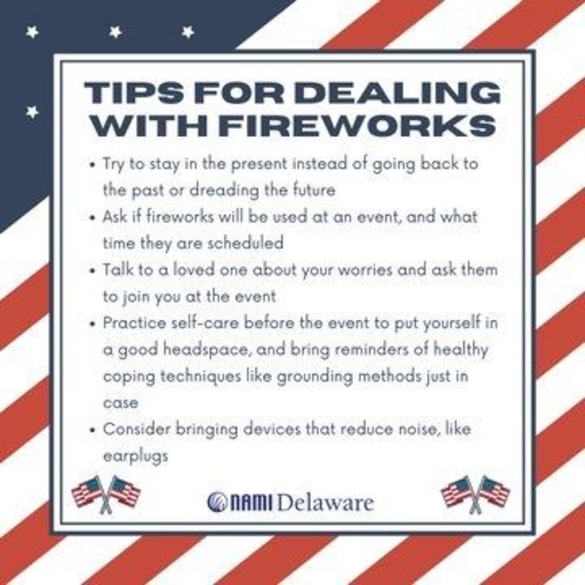
Sharing Independence Day plans with neighbors – including any planned use of fireworks and the time they will be lit – can help make the day more enjoyable for everyone, the Bowen Center said.
It’s a way of “being thoughtful of others who might struggle during the holiday,” Peterson-Stephan said, adding that it may be possible to focus on theme-centered activities other than loud fireworks.
People who know of someone who is struggling or having suicidal thoughts are encouraged to call or text the #988 Suicide and Crisis Lifeline at 988 or chat at 988lifeline.org, the Bowen Center said. The organization has health clinics and provides various support services including addiction recovery. For any life-threatening situations, individuals should call 911.
Independence Day, also known as the 4th of July, is a day when we gather to celebrate with our friends and family by having parades, BBQ's and Fireworks. Which is exactly what Thomas Jefferson told us to do after he drafted the Declaration of Independence, this day is celebrated as the birth of American Independence.
Unfortunately, for some individuals who suffer from PTSD, this American Holiday can be debilitating because the loud fireworks causing fight or flight response, hyper startle response, hypervigilance, and flashbacks. Through my personal experience as a gun violence survivor, I mentally prepare myself for the fireworks on the 4th of July, telling myself that people will be celebrating fireworks and I am not in danger. The hardest part of the "season" for me is the people who set off fireworks during the off hours and off days surrounding the actual holiday, because I am not expecting it to happen.
If you have a hard time on this holiday, check out the list of some self-care activities I listed below. If you are in crisis please call #988 to talk to a trained crisis counselor. Have a Safe and Hopefully Peaceful Holiday written by Julie Burdette, NAMI Lexington.
Some Things You Can Do To Manage Around Fireworks.
Remind yourself that you are safe - PTSD can trick your brain into thinking that things are not what they seem. This means you need to remind yourself of what is actually happening. You can do this by repeating sayings to yourself like, "This is my home," "I am safe here," "These are just fireworks," "I am not in danger." This coping strategy is most helpful when you practice it repeatedly before triggers occur.
Schedule distracting activities that you enjoy during these periods - this can help you relax and focus on things other than fireworks.
Use physical grounding techniques - these techniques can help your body and mind feel safe and more secure. You can do this by leaning your back against a wall or sitting with your feet flat on the floor. There might be other things that make you feel grounded, supported, and safe. For example, wearing a favorite cozy scarf or wearing long sleeves.
Use weighted blankets - wrapping yourself up in a big blanket can feel like a big hug and make you feel comforted. Applying pressure to your body like this can also relax your nervous system and encourage serotonin production.
Try to not turn to avoidance - many people who struggle with hypervigilance as part of their PTSD do things like turning the TV up loud or using headphones to listen to music to drown out the noise of fireworks. However, they say this just isn't possible and avoidance can be counterproductive and add to the sense of danger. They suggest keeping your curtains open and actually watching the fireworks to reassure yourself that the noises and smells are from something harmless.
Use ear defenders, especially if you're very close to fireworks - these might be comforting for you to block out the loudest and sharpest bangs.
Keep it dark - if the flashes of light are what bother you, particularly when you're trying to sleep, try to block out the light. You can do this by installing a temporary blackout blind on your bedroom windows or wearing an eye mask if you're comfortable with that.
Practice breathing techniques - your breathing can become shallow when you are anxious or afraid. This is a programmed biological response. Take slow, deep breaths to tell your brain that everything is OK and it's safe to calm down.
However, the most important thing is not to be too harsh on yourself. You should accept the reactions and emotions you're experiencing, while reminding yourself that the noises are temporary, and you are safe. Don't be critical of yourself, as that will not help.