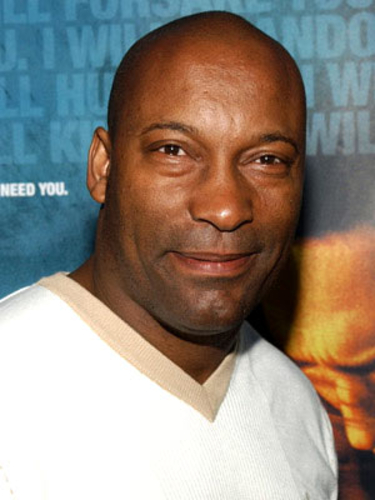
Director John Singleton Warns of the Danger in Allowing White Filmmakers to Tell Black Stories (657 hits)
Quentin Tarantino’s DJango Unchained was met by a mostly receptive African-American audience, but the trend of hiring white filmmakers to create black films has many insiders worried. Among those criticizing this trend is Boyz ‘n the Hoyd director John Singleton, who warns of the “latent racism” in Hollywood which won’t allow blacks to tell their own stories.
Singleton pointed to films like “The Help” and “42“, where black stories were told by white filmmakers, as indications of a “troubling trend” of hiring white directors to tell “black stories.” According to Singleton, these films make it “harder rather than easier for African-American writers and directors to find work.”
“The Help‘s $170 million domestic box office set a new paradigm for how Hollywood wants its black pictures: uplifting, sentimental and inoffensive. It’s no one individual filmmaker’s fault. It reflects the latent racism that influences what gets made and what doesn’t in the studio system, ” wrote Singleton in the Hollywood Reporter.
Singleton says a white Hollywood friend put it to him bluntly: “Hollywood feels like it doesn’t need us anymore to tell African-American stories.”
The friend added that whites in Hollywood feel that since they “voted for and gave money to Obama” they don’t need to “hire any black people.”
DJango Unchained had black producers, but Singleton said that these days that’s a fairly uncommon practice.
But if there is a danger in having white filmmakers tell black stories, should black directors be allowed to tell white stories? Are black people only allowed to tell stories about black people? And are these black stories or American stories? If African-American history is truly American history, should our stories only be told by black people? Isn’t the point whether or not filmmakers are telling authentic rather than whitewashed stories? And is Oprah Winfrey’s The Butler any better than 42?